Amazon Is Still Running an Injury Mill for Workers
Working at Amazon isn’t just physically taxing, it’s dangerous. Despite years of scrutiny and years of company spin, Amazon still has a serious injury rate more than double the rest of the industry.
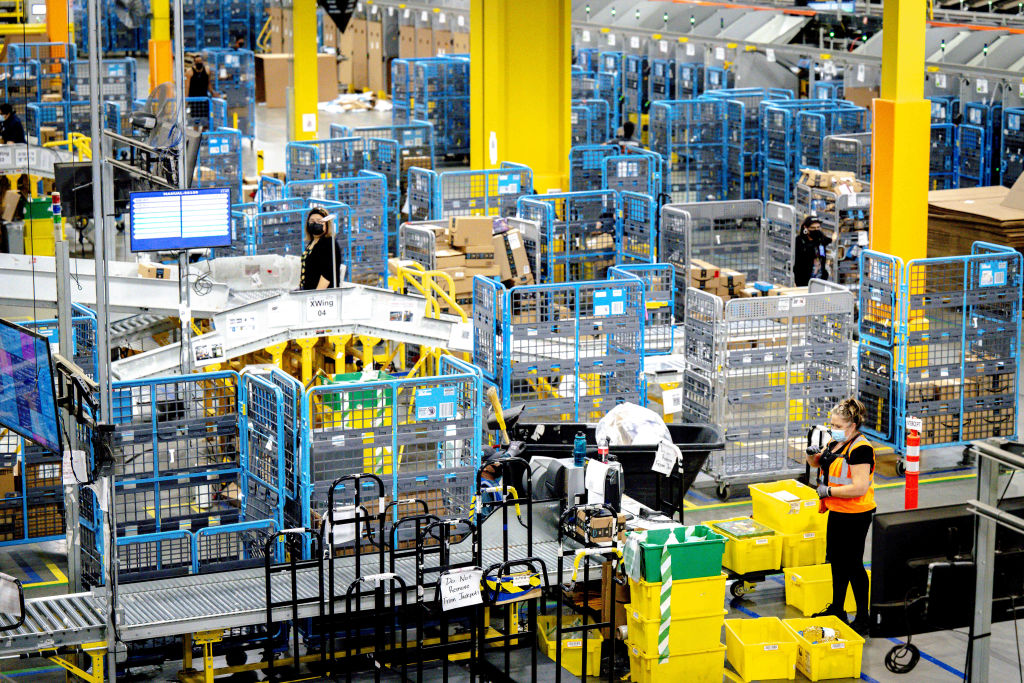
Workers sort out parcels in the outbound dock at an Amazon fulfillment center in Eastvale, California on August 31, 2021. (Watchara Phomicinda / MediaNews Group / The Press-Enterprise via Getty Images)
May is here, which for the investor class means the return of the annual shareholder meeting, in which the leadership of public corporations addresses the one group to which they are theoretically answerable. For Amazon investors, at least during the long reign of founder Jeff Bezos, a highlight of the season has always been the CEO’s letter to shareholders, typically issued in April. Not at all content to offer up the usual anodyne reassurances to investors, Bezos regularly exceeded expectations, dispensing savory bits of execupreneurial wisdom eagerly consumed by the business press and by fellow strivers the world over.
This began to change two years ago, for an ominous cloud had appeared over the company’s carefully managed reputation. A September 2020 exposé by journalist Will Evans had revealed to the public what had long been apparent to the hundreds of thousands of Amazon’s warehouse workers: the firm’s novel techniques of labor extraction were inflicting a terrible toll on the health and well-being of its legions of pickers and packers.
As Evans reported, the rate of serious injury in the warehouses had steadily climbed in recent years, reaching an unprecedented peak of 7.7 per hundred workers in 2019, nearly double that of the industry standard. A second independent analysis, released by the Strategic Organizing Center (SOC) in June 2021, further demonstrated that the company’s extraordinarily high clip of worker injury is directly related to the punishing work rate inflicted on its workers.