Seattle Has Banned Caste Discrimination, a First Outside South Asia
In Seattle, a bill advanced by socialist city council member Kshama Sawant has outlawed caste discrimination. She and Cornel West argue in Jacobin that the law is a victory against oppression.
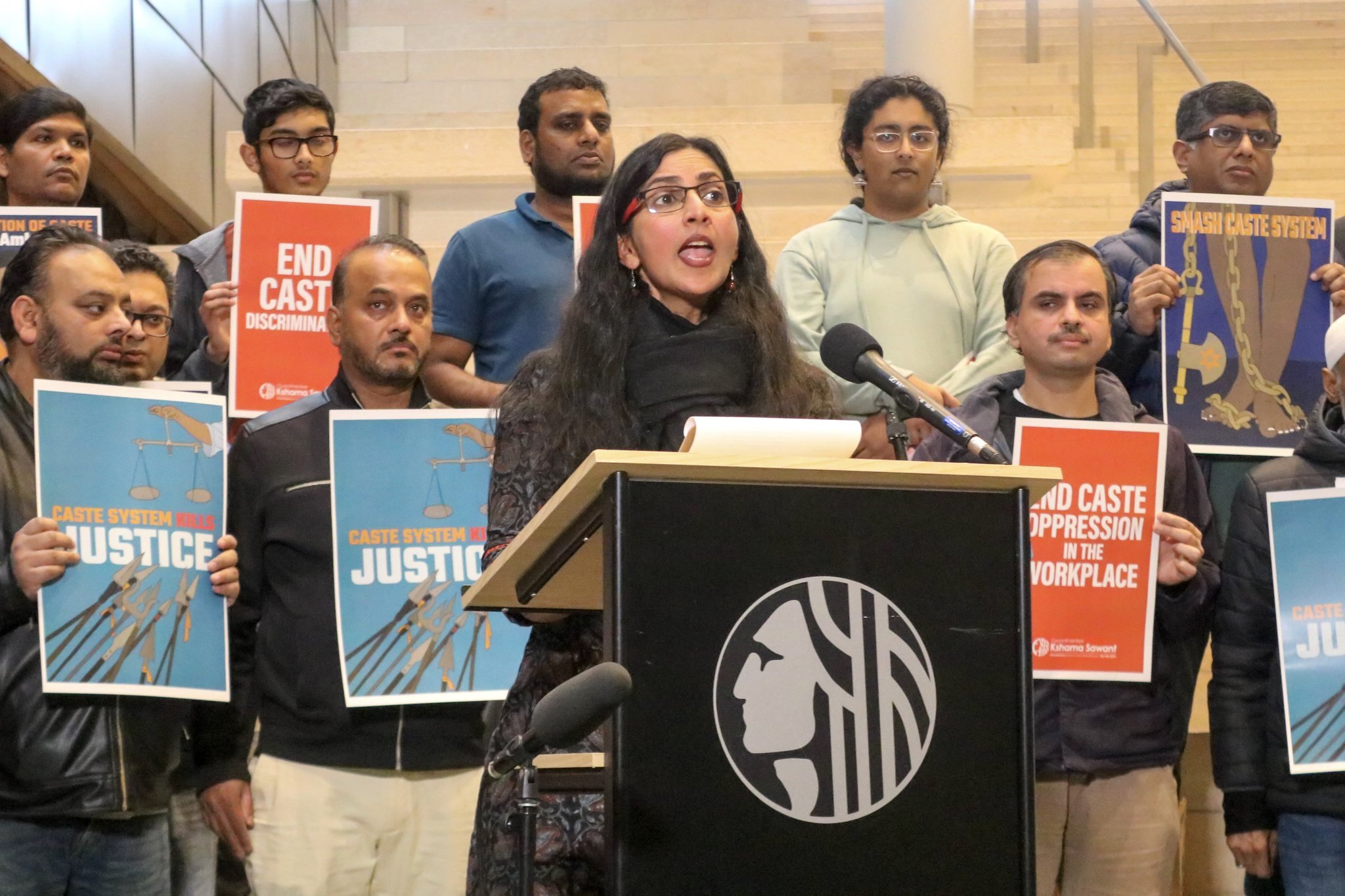
Kshama Sawant and Seattle City Council passed the first law to ban caste-based discrimination in the nation. (Twitter / Kshama Sawant)
When a grassroots movement in Seattle won an ordinance banning caste-based discrimination on February 21, the city became the first jurisdiction outside South Asia to do so. The new law is a victory against oppression — and like all such victories, it required taking on right-wing opponents.
Caste is a system that divides people into a graded hierarchy of groups based on birth, with the “lower” groups facing serious discrimination and even violence. It originated in South Asia about two thousand years ago but remains pervasive under capitalism. Like other forms of oppression, such as racism and sexism, caste oppression is an integral part of class-based societies that enshrine exploitation for the benefit of the few at the top.
Caste-oppressed workers in America have reported discrimination in the workplace ranging from denial of raises and promotions to being excluded from meetings and subjected to verbal indignities. Caste-oppressed community members also report denigration in educational institutions, social boycotts, and various forms of housing discrimination. Two separate statistical studies, one from Equality Labs and another conducted by the Carnegie Endowment for International Peace, have found significant evidence of caste-based discrimination in the United States.