The Struggle Against Caste Oppression Is a Vital Battleground for Indian Democracy
For several generations, India’s Dalits and other oppressed groups have fought for equal rights against upper-caste domination. The history of their courageous struggles can inspire resistance against Narendra Modi’s Hindutva repression today.
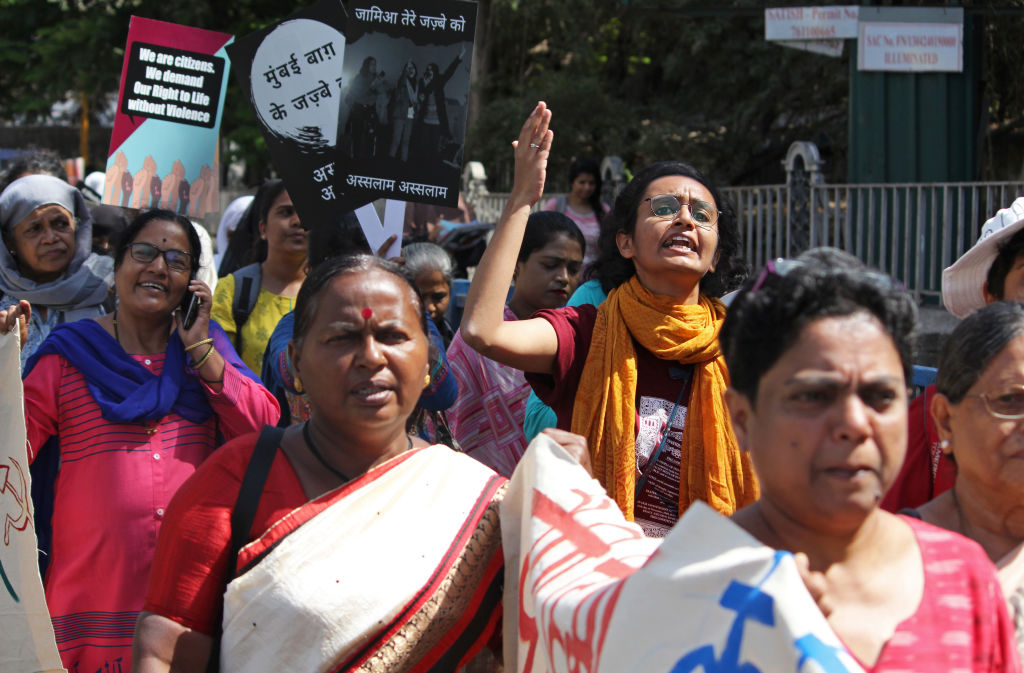
Women from various organizations, including tribal and Dalit communities, gather to take part in a demonstration on International Women’s Day, 2020. (Rudhransh Sharma / SOPA Images / LightRocket via Getty Images)
As it marks its seventy-fifth year of independence, India is enduring an authoritarian turn which has ruptured the country’s foundational claims to secularist diversity and democracy. Since Prime Minister Narendra Modi and his Hindu-supremacist Bharatiya Janata Party (BJP) came to power in 2014, there has been an increase in religious and caste-based violence, coupled with state repression against human rights advocates, intellectuals, and journalists.
With the Hindutva far-right movement extending its reach across many branches of state power, the BJP seeks to transform India into a “Hindu Rashtra” — a religious supremacist state. Having already promoted overt discrimination and incited deadly riots, some Hindutva leaders have even advocated killing millions of Muslims, raising the alarm of global experts on genocide.
At the same time, India has also witnessed an inspiring surge of popular movements that have challenged BJP policies targeting the citizenship of India’s Muslim citizens, threatening the rights of caste-oppressed communities, and infringing on the livelihoods of farmers. As we move through the 2020s, the memories and lessons of previous eras echo across each generation, giving us precious resources of wisdom and hope.