55 Years After MLK’s Death, His Radical Vision Should Galvanize Our Struggles Today
Martin Luther King Jr was assassinated 55 years ago today while in Memphis standing in solidarity with striking sanitation workers. His life and radical words stand as a beacon of hope, urging us to keep fighting for economic and racial justice.
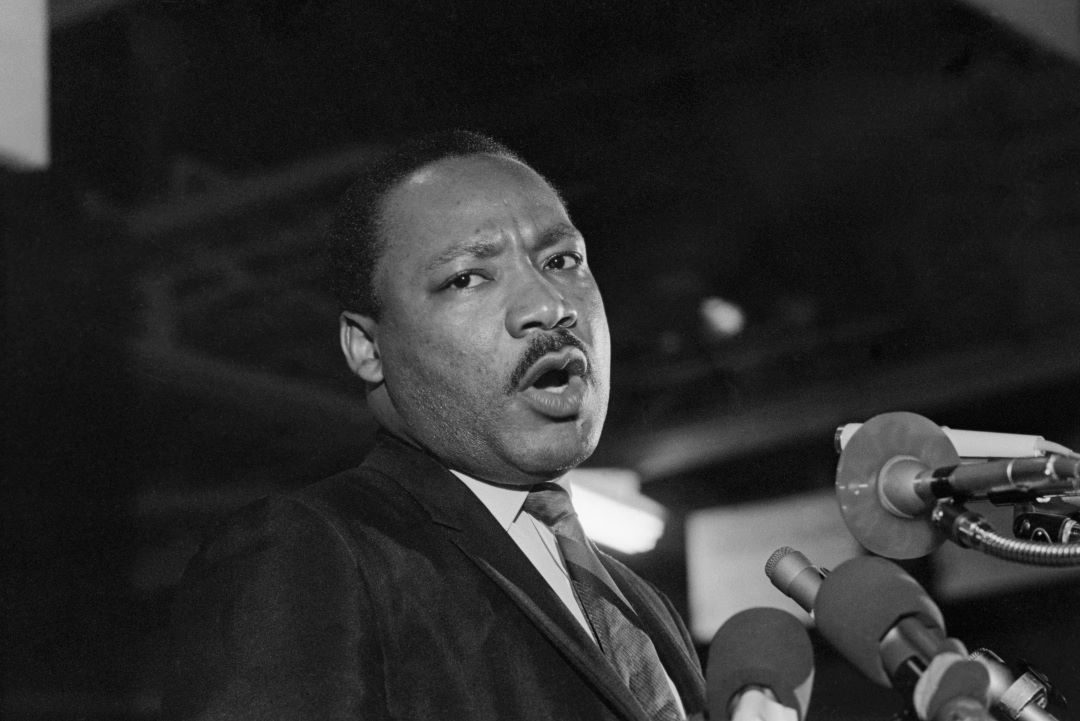
On April 3, 1968, Dr Martin Luther King addresses 2,000 people on the eve of his death in Memphis. (Bettmann / Getty Images)
Every year, Americans pay homage to Martin Luther King Jr, on the weekend of his birthday in Atlanta on January 15, 1929. It was the eve of the Great Depression. Jim Crow segregation ruled the South and, de facto or by law, most of the United States. His remarkable life galvanized ordinary people through small acts of resistance and mass mobilizations that together mandated equality in the law and full voting rights for all. Today we still fight to protect and extend these advances, now under attack by the Trump Republican Party.
On April 4, we commemorate another day of homage to King. That day in 1968, an assassin used an unregistered, high-powered rifle to shoot King down as he stood at the balcony at the Lorraine Motel. King’s murder in the prime of life (like Malcolm X, at age thirty-nine) set off rebellions in over one hundred cities. Outrage at King’s assassination triggered the greatest mobilization of US troops to suppress domestic rebellions since the Civil War. Two months later, another assassin murdered Senator Robert F. Kennedy in California.
These two murders marked a turning point with broad implications for social justice in America, dampening hopes of ending the Vietnam War and reallocating US resources from war to fighting poverty, as Kennedy had suggested, and as King had demanded in his Poor People’s Campaign. It seemed to close out the 1960s, placing Richard M. Nixon in the presidency and setting off an era of heightened racism, repression, and reaction.