MLK Was a Radical Who Hated Not Only Racial Subordination But Class Exploitation
Throughout his adult life, Martin Luther King Jr believed in striking down not only racial apartheid but class exploitation. That twin commitment was embodied in his final effort: the often-forgotten Poor People’s Campaign.
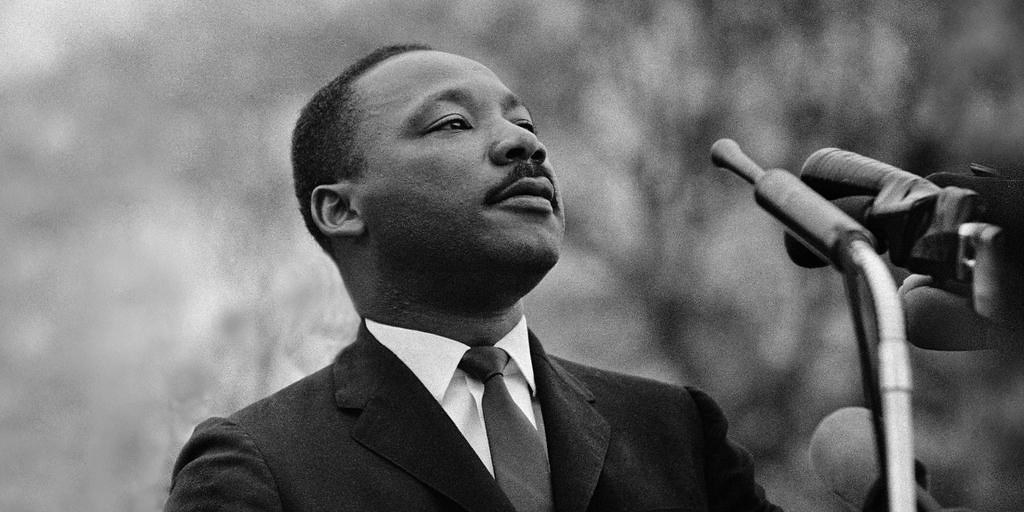
Martin Luther King Jr. (RV1864 / flickr)
On April 4, 1968, Martin Luther King Jr was in Memphis, Tennessee, supporting a strike by municipal sanitation workers when he was shot and killed. While menial sanitation work was performed exclusively by African American men in Memphis, King’s support for the strike was about more than just race. A longtime student of progressive political scientists, sociologists, and economists, King saw Memphis as “a necessary stepping stone to Washington,” in the words of a colleague from the Southern Christian Leadership Conference, the organization he had founded to strengthen the civil rights movement.
In less than three weeks, multiracial caravans of poor people from all over the United States were set to converge on Washington, DC, to demand the federal government directly provide, or underwrite, universal access to the necessities of a dignified life, including work, housing, education, and health care. Following King’s assassination, the Poor People’s Campaign, as it was known, did occupy the National Mall and other strategic targets, such as federal agencies, for nearly two months. But in the end, the tenuous coalition of liberals and radicals that King had assembled could not hold up against state repression, including infiltration by the FBI.
The Poor People’s Campaign was ultimately cleared by tear gas and bulldozers, and its memory was relegated to an unfortunate afterword in the whitewashed history of the civil rights movement. Jacobin contributor Arvind Dilawar recently spoke with Sylvie Laurent, author of King and the Other America: The Poor People’s Campaign and the Quest for Economic Equality, about the so-called second phase of the civil rights movement, King’s radical views on issues like automation and universal basic income, and how the Poor People’s Campaign fit into King’s politics of collective liberation. Their conversation has been lightly edited for clarity and brevity.