Chief Justice John Roberts Is Resisting Enforcement of Ethics Rules on the Supreme Court
Chief Justice John Roberts has repeatedly declined to use his position to impose a code of ethics on the highest court. Now, he’s punting investigation of Clarence Thomas’s corruption scandal to a panel of lower court judges whose identities are secret.
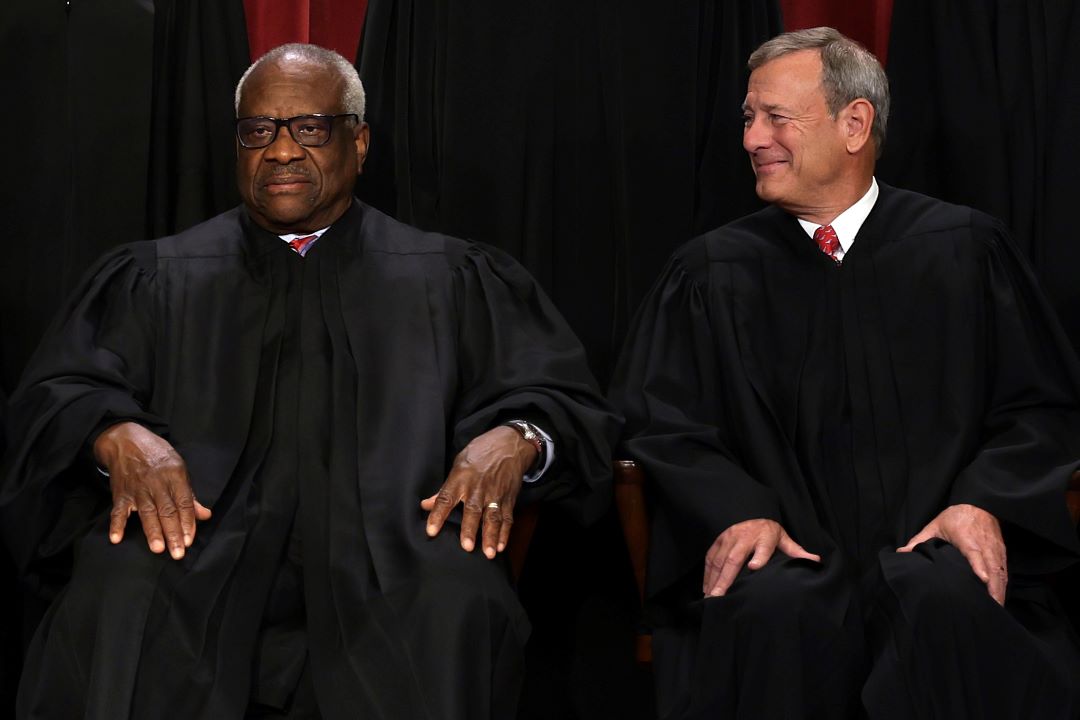
Supreme Court associate justice Clarence Thomas and chief justice of the United States John Roberts pose for their official portrait at the East Conference Room of the Supreme Court building on October 7, 2022, in Washington, DC. (Alex Wong / Getty Images)
A decade before Chief Justice John Roberts rejected a Senate request this week to testify about corruption scandals engulfing the Supreme Court, he threatened to challenge a congressional effort to ensure the high court’s justices abide by federal corruption laws, according to documents reviewed by the Lever.
Now, instead of spearheading an investigation into Justice Clarence Thomas’s undisclosed luxury gifts and real estate transactions, Roberts is punting to a little-known panel of lower court judges whose identities are secret, according to a spokesperson for the judiciary.
Roberts’s posture spotlights a crisis in America’s system of checks and balances: if the legislative and executive branches refuse to assert oversight authority over the nation’s highest court, Supreme Court justices can continue to operate with complete impunity.