Clarence Thomas Has Long Fought to Kill Laws Requiring Transparency in Political Spending
While receiving lavish gifts from billionaire Harlan Crow and then failing to disclose them, Clarence Thomas pushed to invalidate all disclosure laws, insisting that donors have a right to anonymously influence politics with unlimited amounts of cash.
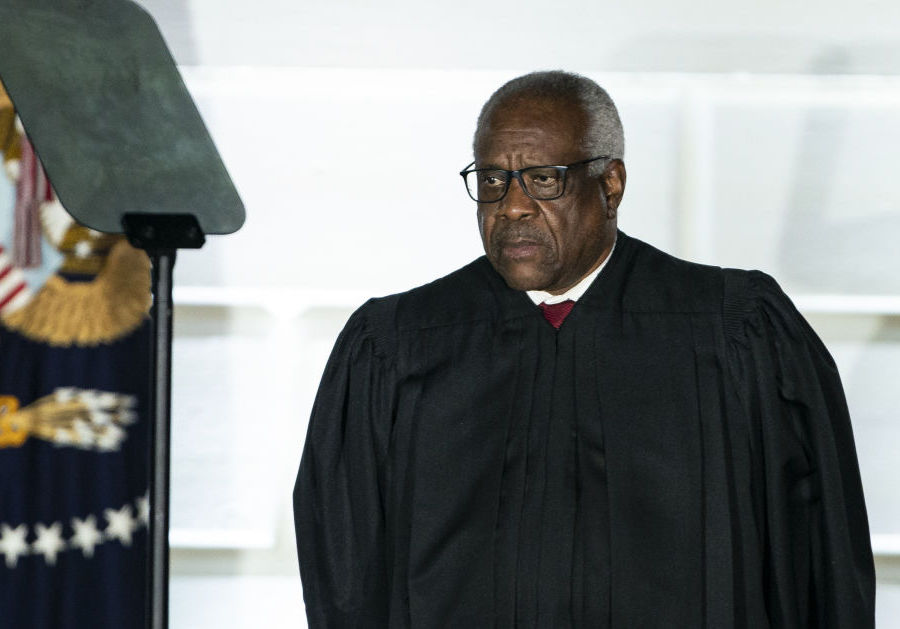
Clarence Thomas at the White House in Washington, DC, October 26, 2020. (Al Drago / Bloomberg via Getty Images)
While refusing to disclose lavish gifts from a billionaire, Supreme Court justice Clarence Thomas pushed to invalidate all political spending disclosure laws in America, insisting that donors have a constitutional right to anonymously influence politics with unlimited amounts of cash.
The undisclosed gifts from billionaire Harlan Crow — who has links to groups that file amicus briefs lobbying the Supreme Court — were exposed by a ProPublica report last week. If Thomas now faces no investigation or consequences for potentially violating long-standing federal ethics laws, his actions could create a precedent effectively legalizing unlimited, unreported gifts in much the way he demanded for political donations.
In 2010, the Supreme Court issued its notorious Citizens United ruling, declaring that “independent expenditures, including those made by corporations, do not give rise to corruption or the appearance of corruption” — and therefore could be made limitlessly.