Why the Contemporary Right Loves Nietzsche (and Heidegger and Schmitt)
Today’s right-wing thinkers look to Nietzsche and other German reactionaries to ground their elitist politics — and to do battle with leftists' project of universal emancipation.
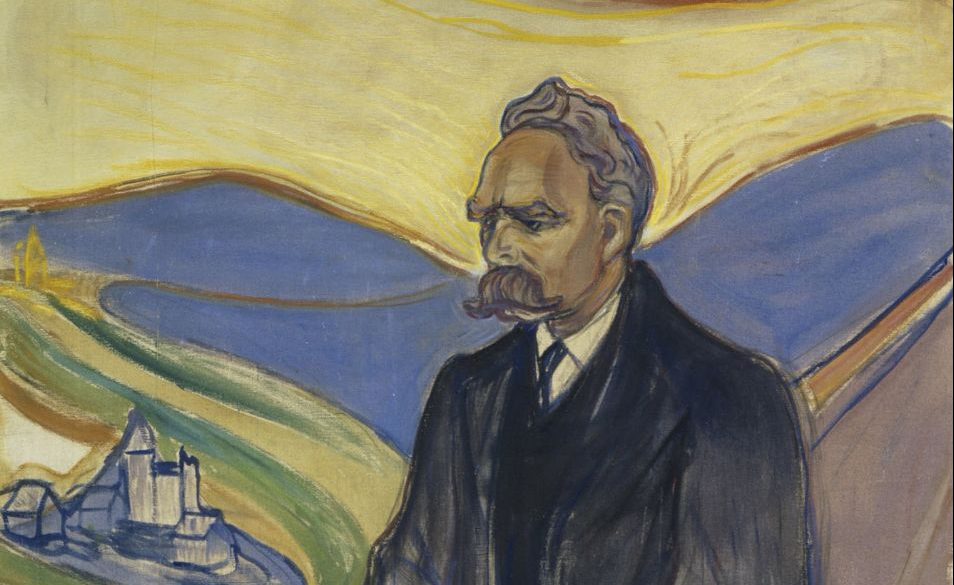
Detail of Edvard Munch, Portrait of Friedrich Nietzsche, 1906.
In his excellent new book, Conservatism: The Fight for a Tradition, Edmund Fawcett asks a fair question: If the Left is so smart, how come we’re not in charge? Since John Stuart Mill’s lacerating characterization of conservatives as the “stupid” party, many opponents of right-wing politics have delighted in simply mocking the vulgarity and dogmatic prejudices of their foes. But time has shown that we do so at our own peril. Lobbing grenades without understanding our adversaries is a foolhardy endeavor.
On today’s political right, three late German thinkers loom large: Friedrich Nietzsche, Martin Heidegger, and Carl Schmitt. All three wrote their most important works between 1850 and 1950, a time of transformative rise and Luciferian fall in Germany, and despite major differences, all three expressed profound discomfort with the egalitarianism and libertinism of modernity.
For stalwart defenders of capitalist hierarchy like Jordan Peterson, illiberals like Adrian Vermeule, and of course the alt-right, Nietzsche, Heidegger, and Schmitt furnish the intellectual armor to do battle with the Left. Ironically, the reactionary trio has also had their fair share of left-leaning fans and interpreters — which makes examining and critiquing their work all the more important for leftists today.