How the Nazis Exploited the Reichstag Fire to Launch a Reign of Terror
Ninety years ago today, a fire engulfed the Reichstag in Berlin. The arsonist, Marinus van der Lubbe, was hoping to inspire resistance to fascism, but the Nazis used the fire as a pretext to impose a regime of violent terror against the German left.
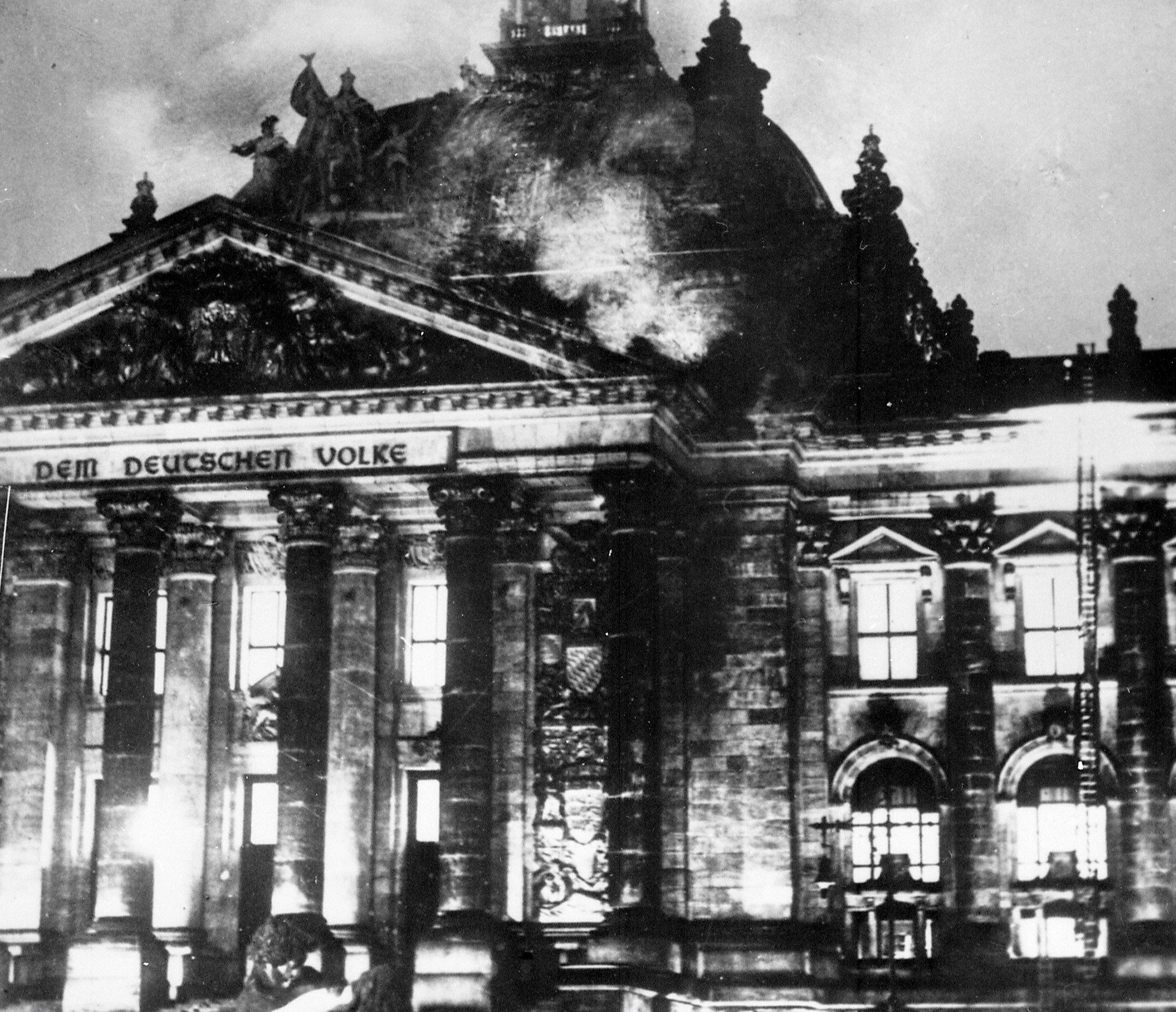
The Reichstag in flames, February 1933. (Wikimedia Commons)
Ninety years ago today, on February 27, 1933, a fire engulfed the German parliament, the Reichstag. The inferno came just weeks after the appointment of Adolf Hitler as Germany’s chancellor.
The Nazis had not yet established an untrammeled dictatorship, and they immediately used the Reichstag fire to strengthen their position. Claiming that the fire was meant to be the signal for a communist insurrection, they cracked down violently on their enemies — most of all the activists of the Communist Party (KPD).
Many people assumed that the Nazis must have been responsible for the fire, which came at such a convenient moment. Indeed, “Reichstag fire” still serves as a shorthand term for an act of terror used as an excuse to seize power.