The Rise and Fall of Marcus Garvey
Marcus Garvey rose to prominence during a moment of deep pessimism for African American politics. His brand of racial uplift and black entrepreneurialism accommodated itself to Jim Crow and colonialism but fell out of favor as radical alternatives emerged.
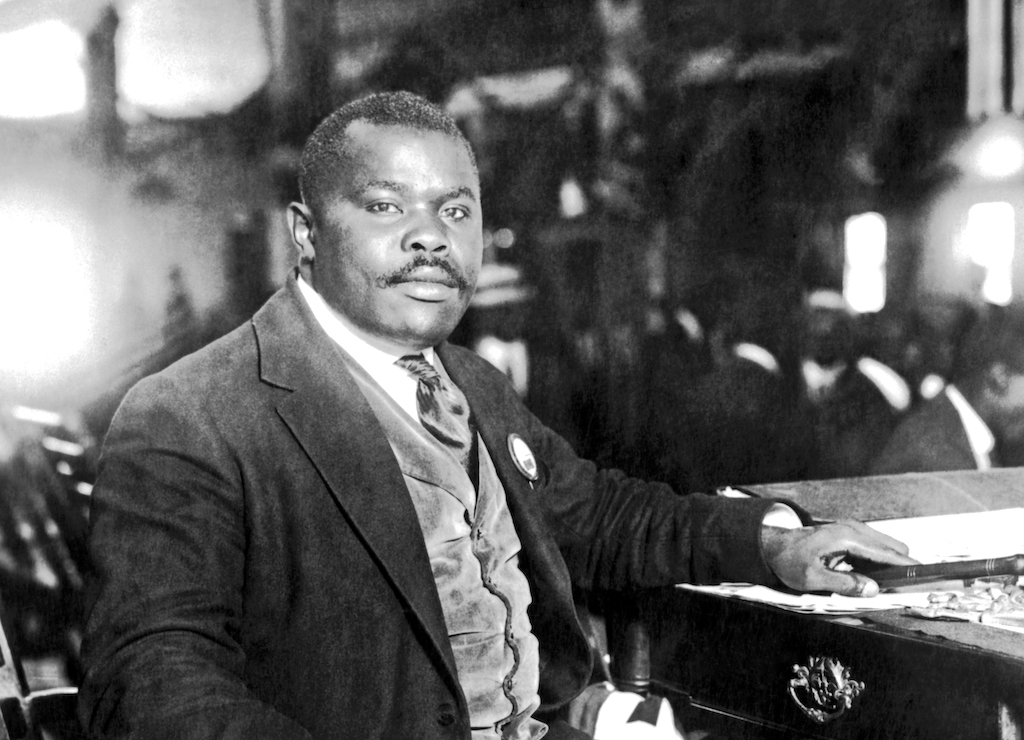
Founder and leader of the UNIA Marcus Garvey, August 5, 1924. (Underwood Archives / Getty Images)
In August 1920, an audacious scene took place in Madison Square Garden. Around twenty-five thousand black delegates, gathered for the first convention of the United Negro Improvement Association (UNIA), drafted and approved a Declaration of Negro Rights. At that gathering, Marcus Garvey, the founder and undisputed leader of the UNIA, was elected as the Provisional President of Africa. The proceedings were supported from afar by UNIA chapters not only in urban US cities, but also in the West Indies, Latin America, and Africa.
Within just five years, Garvey would be exiled in prison and his organization in terminal decline. But for a brief moment he and the UNIA did what other leaders and organizations up to that point could never do: they built a truly mass following among urban blacks of various classes.
Despite the patina of militancy and radicalism, the Garvey movement represented a fundamentally conservative trend in black political history. At its core, the project combined two regressive tendencies in late-nineteenth and early-twentieth-century black politics. The first was an abandonment of the more radical aims of reconstruction in favor of a politics of self-help, racial uplift, and entrepreneurialism. The second was an embrace of Pan-Africanism, made possible by the coincidence of the end of slavery in the United States and the ratcheting up of colonialism in Africa. This allowed aspiring members of the black bourgeoisie to conceive of themselves as spearheading the West’s civilizing mission.