Which Workers Are “Strategic” to Organize?
Two key questions confront labor: should unions focus on organizing workers with major strategic leverage in the economy? Or should they welcome any workers willing to fight, since that organizing can constitute a major catalyst for other workers?
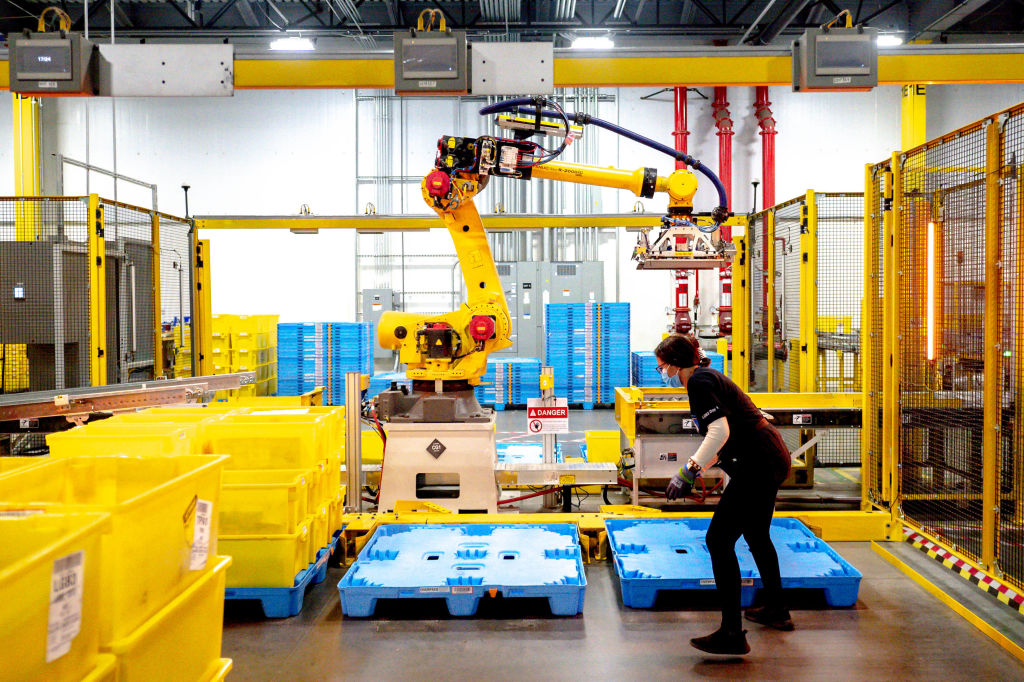
A robot, alongside a worker, sorts and stacks bins at an Amazon fulfillment center in Eastvale, California on August 31, 2021. (Watchara Phomicinda / MediaNews Group / The Press-Enterprise via Getty Images)
The question about how to revive a shrinking labor movement has taken on great urgency in recent decades. The latest US union membership data is depressing, with only about 10 percent of the workforce formally organized, a proportion getting smaller every year. In the private sector, it’s at a crisis level of 6 percent. In a country where 71 percent approve of unions and half of nonunion workers want to be a union, the interest among workers is there, but the organizing environment is stacked against unions. Employers engage in union busting, and inadequate labor law lets them get away with it. The labor movement as a whole is growing weaker and less able to exert meaningful power.
In the midst of this dilemma comes Labor Power and Strategy. Edited by longtime unionists Peter Olney and Glenn Perušek, the book begins with an interview with historian John Womack Jr, who has studied workers and the labor process in Mexico; ten labor organizers and scholars then respond with their own thoughts about how the labor movement should organize and build power.
In his research, Womack became interested in “industrially strategic positions” that held the most power in the production process. This can then guide worker organizing, as it has throughout labor history, as in the successful 1936–37 United Auto Workers (UAW) strike at the critical General Motors parts-stamping plants in Flint, Michigan, which led to the key breakthrough in organizing the auto sector.