Spain’s Left Badly Needs to Join Its Forces
Labor minister Yolanda Díaz is Spain’s most popular politician — and her new Sumar electoral vehicle promises to greatly expand the Left’s support. But the project remains marred by infighting, with strained relations between Díaz and her Podemos allies.
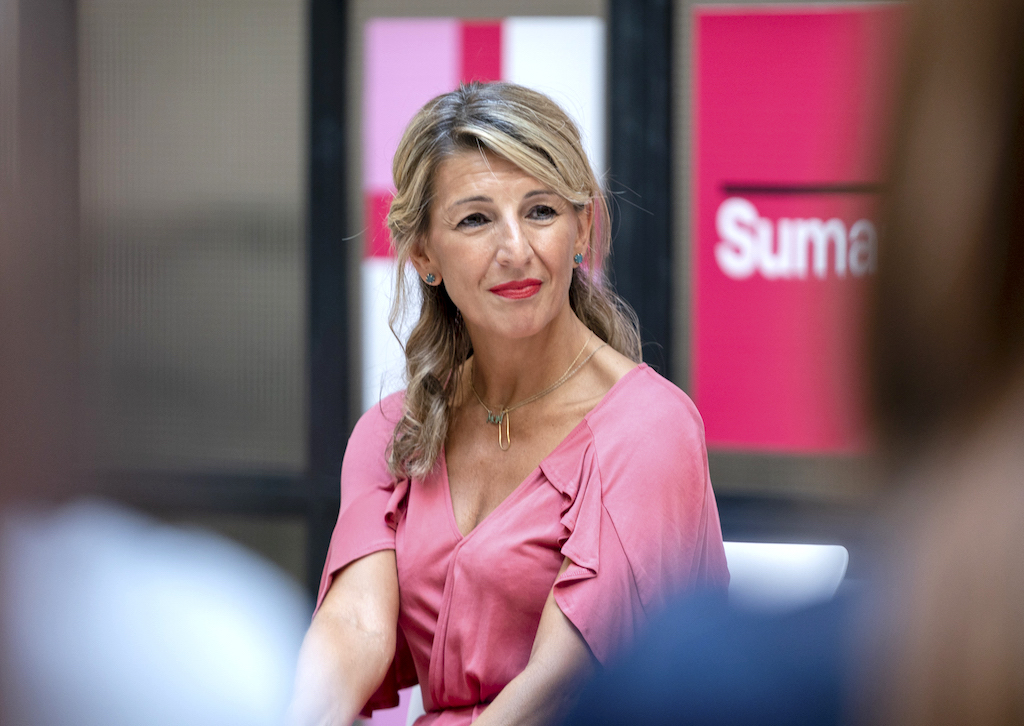
Yolanda Díaz during the presentation of the working coordinators of Sumar in Madrid, Spain on September 23, 2022. (A. Perez Meca / Europa Press via Getty Images)
“To defeat the Right [electorally] is relatively easy but we want to change people’s lives and to win a new country.” So said Spanish labor minister Yolanda Díaz as polling showed her proposed left-unity platform Sumar making major gains ahead of the general election planned for later in 2023. In a December 5 poll for the Prisa Group, her new electoral vehicle was projected to secure 18.7 percent of the vote and fifty-nine seats — that is, twenty more MPs than the combined 2019 electoral result for Unidas Podemos alliance and former ally Más País.
Diaz took over from Podemos founder Pablo Iglesias as deputy prime minister in mid-2021. Since then, she has repeatedly polled as Spain’s most popular political leader — outperforming even Prime Minister Pedro Sánchez, who leads the center-left Socialists (PSOE). Combining a clear institutional profile with her close links to the country’s trade unions, she has sought to reorientate the radical left as an alternative governing force to PSOE, while contesting its claim to be Spain’s natural party of labor. “Yolanda is a reformist social democrat but with the virtue that she does what she says — prioritizing concrete gains for working-class people and defending their living standards,” Unidas Podemos MP Txema Guijarro tells Jacobin.
Sumar’s polling suggests that a reorganized and united left could come out of its grueling term as PSOE’s junior partner in a stronger position electorally. This would be an impressive achievement given the travails of the last four years. Excluded from the major ministries of state, Unidas Podemos and its five ministers have had to accept a series of unpalatable decisions in foreign, defense, and security policy. They have focused their efforts on social reforms and a more progressive response to the pandemic and subsequent cost-of-living crisis — against PSOE resistance. In recent months, they have forced a series of concessions, with Sánchez accepting the Left’s emergency proposals to slash transport fares (including making commuter and medium-distance trains free for at least sixteen months), introducing inflation-level increases in key welfare programs, and imposing a temporary wealth tax and moderate windfall taxes on the energy giants and the banks.