How British Workers Toppled the Anti-Union Industrial Relations Act
Britain saw a massive wave of collective action in the 1970s as trade unionists opposed a law that limited the right to strike. Revisiting this history provides a blueprint for fighting back against the Tories' anti-union legislation today.
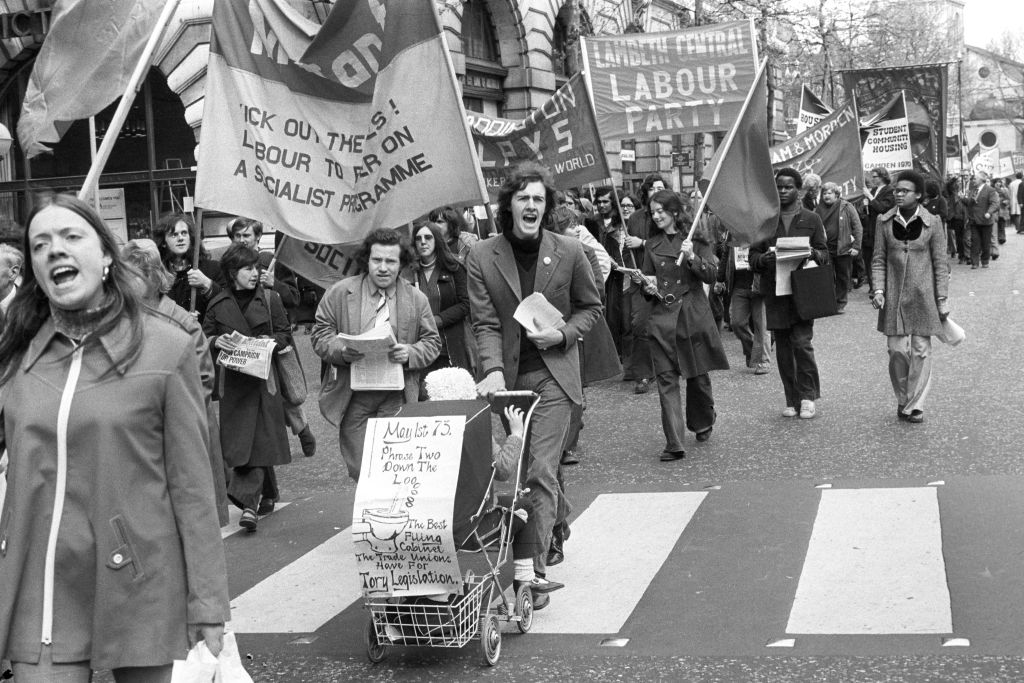
Workers protesting against the Industrial Relations Act in London, 1973. (PA Images via Getty Images)
The postwar story of industrial relations is one of change. Trade union membership was high in the 1950s, and a significant number of those members were Tory voters. When Winston Churchill came back into office in 1951, he took a cautious approach in search of stabilizing the wounded postwar economy. Despite significant but localized unrest in the coalfields and occasional national disputes like the 1953 oil strike and the 1957 bus strike, the industrial landscape remained relatively calm.
The changing social trends and relatively high inflation of the 1960s was reflected in the growth of white-collar and public sector workers’ unions. Industrial action was also increasing, with a growing number of strikes originating from the workplace level. Rank-and-file members in the car industry, for example, with no real propensity for industrial conflict before World War II, caused a marked increase in days lost to strike action.
When the Royal Commission on Trade Unions and Employers’ Associations — known as the Donovan Commission — was set up in 1965, trade unions were on good terms with the Labour government that had come in the previous year. But by the time the commission gave its findings in the 1968, cracks had begun to show.