To Pass the PRO Act, We Need to Examine Past Labor Law Reform Failures
The battle for labor law reform has historically been one of the most difficult in US politics. Passing the PRO Act is crucial — but workers may not be able to win it without flexing their strike muscles.
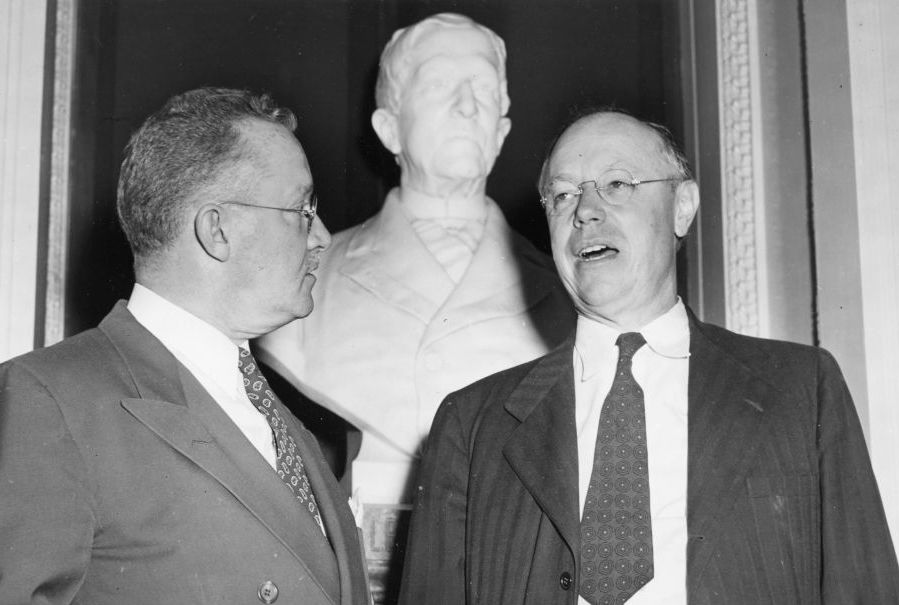
US Representative Fred A. Hartley Jr (L) and US Senator Robert A. Taft (R), coauthors of the Taft-Hartley Act, Washington DC, 1947. (Acme / PhotoQuest / Getty Images)
On March 9, the US House of Representatives passed HR 842, the Protecting the Right to Organize (PRO) Act. It has since been referred to the Senate, where it faces an uphill battle.
If approved, the PRO Act would be the most pro-union law since the National Labor Relations Act of 1935 (NLRA), commonly known as the Wagner Act. It would fix a lot of what is currently broken about labor law.
It would limit employers’ ability to intervene in union election campaigns, impose steeper penalties for employers who break the law, make it harder for employers to drag out negotiations and refuse to bargain with certified unions, legalize currently outlawed forms of union solidarity such as secondary boycotts, make it more difficult for employers to misclassify workers as “independent contractors,” and forbid so-called “right to work” laws. Instead of giving employers another tool to thwart workers’ rights, the PRO Act would align US statutes more closely with the spirit of the preamble to the Wagner Act, which states that the federal government should promote collective bargaining.