The US-Saudi Split and the Yemen War
Will Saudis’ battles with Joe Biden help end Washington’s support for their brutal war in Yemen?
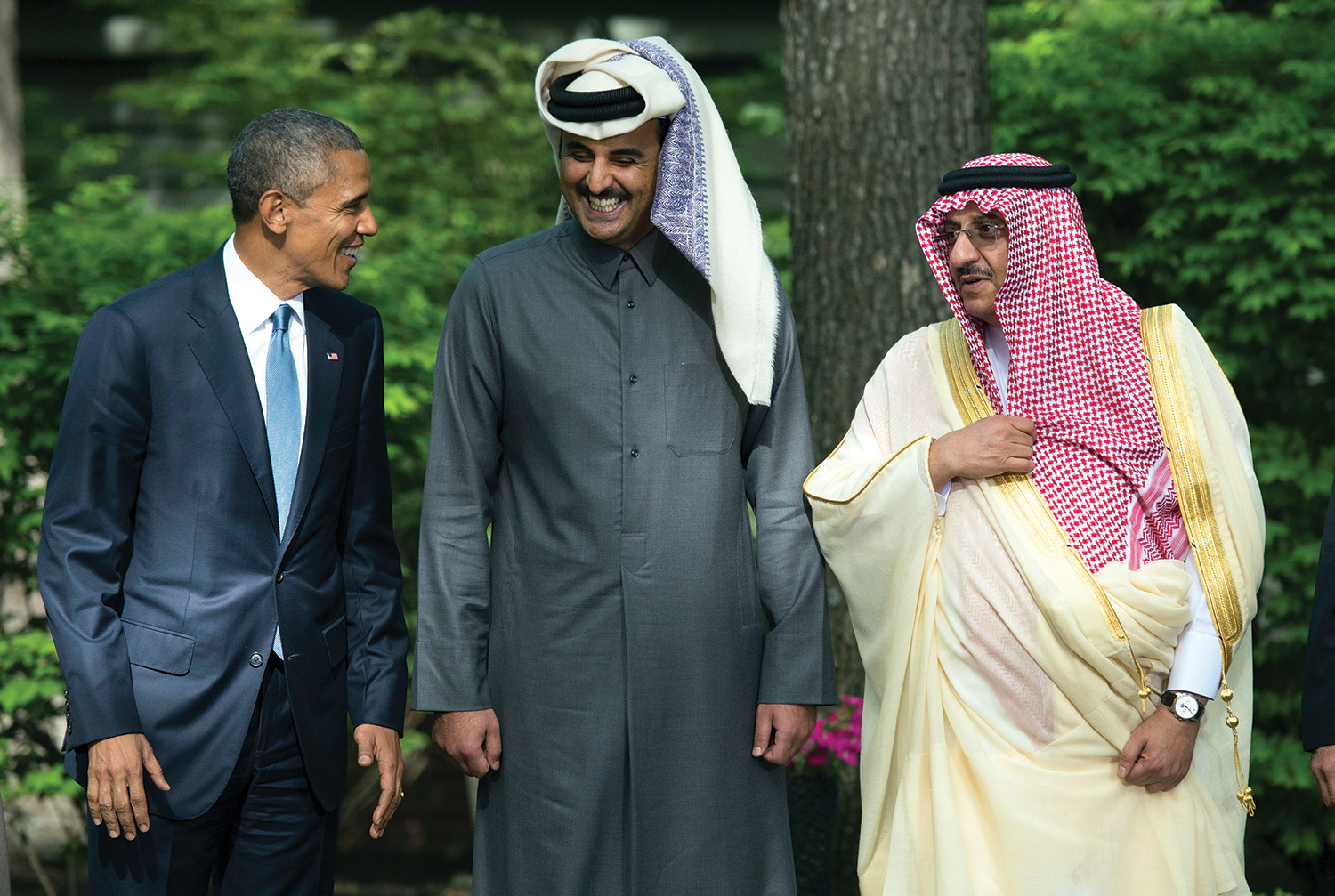
President Barack Obama speaks with Emir Sheikh Tamim bin Hamad al-Thani of Qatar and Crown Prince Mohammed bin Nayef of Saudi Arabia followingthe Gulf Cooperation Council–US summit, May 14, 2015. Obama maintained an awkward alliance with Saudi Arabia during his administration, though it was punctu-ated by decisions that rankled that country’s government, most notably the 2015 Iran nuclear deal. (Kevin Dietsch-Pool / Getty Images)
If you’re going to undermine your own rhetoric and professed values by cozying up to a brutal autocrat, you might as well get something out of it. While maybe an obvious point to the rest of us, it’s apparently something US officials are just now belatedly realizing about their relationship to Saudi Arabia.
That “unbreakable” alliance is now suffering perhaps its severest strain yet. Last week, the Organization of the Petroleum Exporting Countries (OPEC) cartel, which exercises a worldwide quasi-monopoly on oil, agreed, at Saudi urging, to a major production cut of two million barrels per day, which sent US gas prices climbing after months of easing. Washington, which objected strenuously to the move to no avail, is already viewing it as a “hostile act” by Crown Prince Mohammed bin Salman.
Many observers are calling the cut an attempt to create an “October surprise” for Joe Biden’s administration, pushing up inflation just in time for the American mid-term elections. In response, President Biden is now talking about reevaluating the United States’ relationship with the brutal autocracy.