Democrats Have Given Up on Fighting Dark Money
With Republicans taking over the House in January, Democratic lawmakers have given up on efforts to end the political dark money era. Congress’s year-end omnibus spending bill will once again help dark money donors hide their identities from the public.
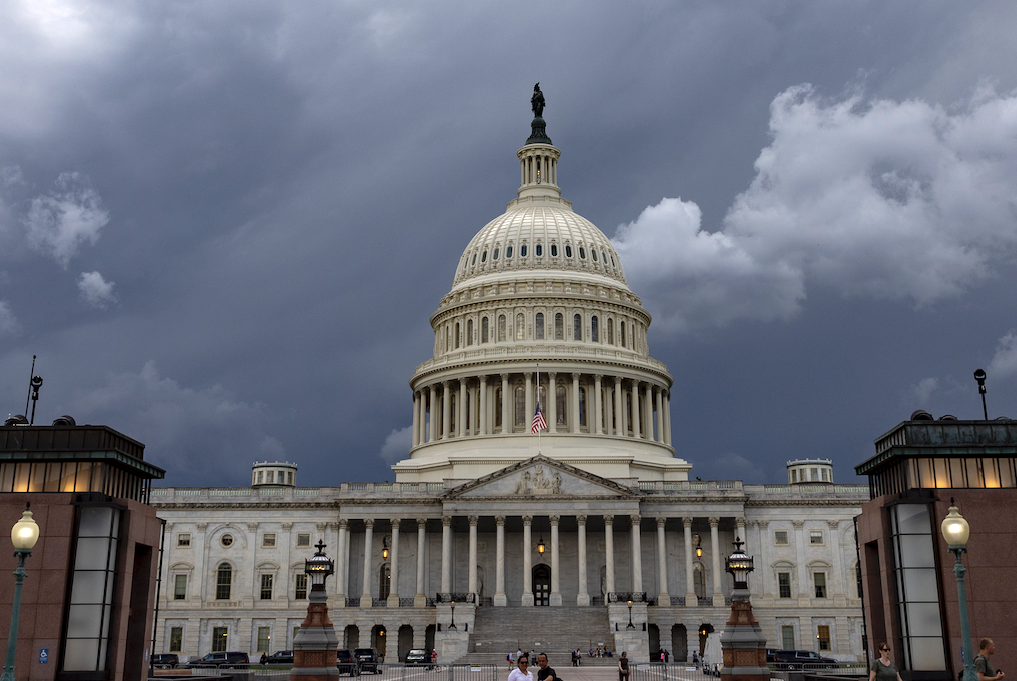
With Republicans set to take over the House in January, Democratic lawmakers are throwing in the towel on efforts to end the political dark money era. (Anna Moneymaker / Getty Images)
As part of its year-end omnibus spending bill, Congress will once again help “dark money” donors hide their identities from the public and ensure the government cannot crack down on dark money nonprofits that spend the bulk of their revenue on politics.
With Republicans set to take over the House in January, Democratic lawmakers are throwing in the towel on efforts to end the political dark money era. Provisions in the $1.7 trillion spending bill, which is often used as a vehicle to enact controversial measures because it funds critical government operations, will prohibit Biden administration officials from doing much, if anything, to regulate dark money groups on their own for the rest of Joe Biden’s first term.
Democrats’ surrender on dark money comes after several failed legislative efforts to compel politically active nonprofits to disclose their donors — and as dark money becomes increasingly enmeshed within our political system. Ever since the Supreme Court’s 2010 Citizens United decision allowed anonymous donations to flow into elections, both parties have become increasingly reliant on dark pools of cash to fund TV ad wars over presidential elections, congressional races, and even judicial confirmation campaigns. The situation allows ultrawealthy, mystery donors to exert unprecedented influence in Washington.