For the Antiwar Movement, Soldier Trauma Was Another Argument Against War
In the Vietnam War era, radical psychiatrists and antiwar veterans developed a concept of trauma stemming from perpetrating acts of violence. Over the next decade, the idea of soldier trauma was depoliticized and put at odds with antiwar critique.
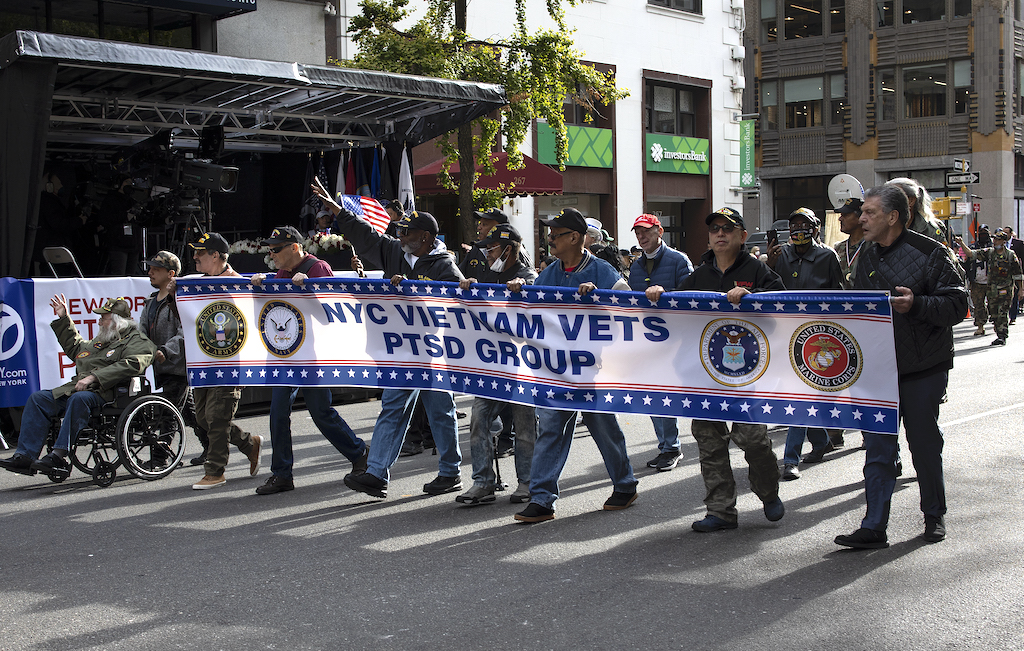
Vietnam veterans with PTSD march in the annual Veterans Day Parade on November 11, 2021 in New York City. (Andrew Lichtenstein / Corbis via Getty Images)
Nadia Abu El-Haj’s new book, Combat Trauma, explores shifting clinical and public understandings of soldier trauma from the Vietnam War era to the post-9/11 present. The book examines how the figure of the traumatized soldier frames an ethical commonsense about what American civilians owe those who fought in the military and how that consensus ultimately forecloses on the possibility of antiwar critique.
Abu El-Haj is a professor of anthropology at Barnard College and codirector of the Center of Palestine Studies at Columbia University. She sat down with American psychotherapist and Jacobin contributor Chandler Dandridge to discuss the radical origins of the concept of soldier trauma and its subsequent absorption into the pro-war status quo.
Chandler Dandridge
After devoting your first two books to Israel and Palestine, Combat Trauma appears to chart new territory for you. What made you want to write about American militarism in the post-9/11 era?
Nadia Abu El-Haj