Teachers Are Burned Out. Unions Can Help Them Understand Why — and That They’re Not Alone.
It’s an incredibly difficult time to be a public school teacher. Collective action can help teachers realize that their problems are caused by systemic issues, not individual failings, and that the solutions require acting together.
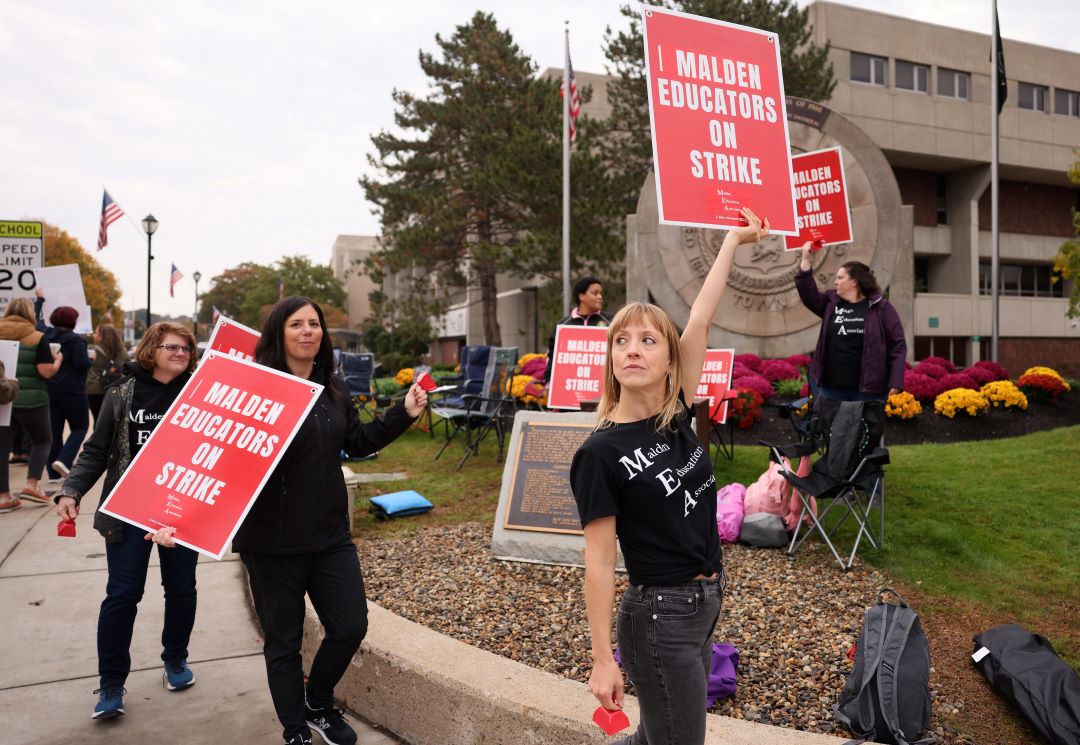
Nierika Nims, an English teacher at Malden High School, walks the picket line with fellow Malden educators on strike on October 17, 2022. (Jessica Rinaldi / Boston Globe via Getty Images)
Fed up with unjust, unsafe conditions that devalued teachers and students, educators in two Massachusetts towns walked out last month in illegal strikes. Undeterred by judges, threats, and fines, the Haverhill Educators Association (HEA) and the Malden Educators Association (MEA) — both chapters of the Massachusetts Teachers Association (MTA) — stood together and won expansive gains. “At some point,” HEA vice president Barry Davis told Labor Notes’ Barbara Madeloni, “you have to choose between doing what is right and doing what is legal.”
Madeloni, staff organizer at Labor Notes, helmed the MTA as president during its metamorphosis into the rank-and-file powerhouse it is now: a statewide union willing to go to bat for illegally striking locals and the common good. Madeloni is quick to point out that members, not just her or any other leader, deserve credit for the union’s impressive victories. Through her work with the MTA’s left caucus, Educators for a Democratic Union (EDU), and with Labor Notes, Madeloni has developed keen insights into the process of building transformative teacher power.
With conditions in US schools now at a particularly brutal point, Jacobin’s Nora De La Cour spoke with Madeloni about how ordinary teachers’ union members can fight back.