Climate Reparations Could Be Based on Post-Nazi Germany’s Payouts
Wealthy countries don’t want to pay climate reparations, but they’re going to have to. COP27 officials are currently grappling with who will pay for climate-related catastrophe and how. They could look to postwar Germany for a model.
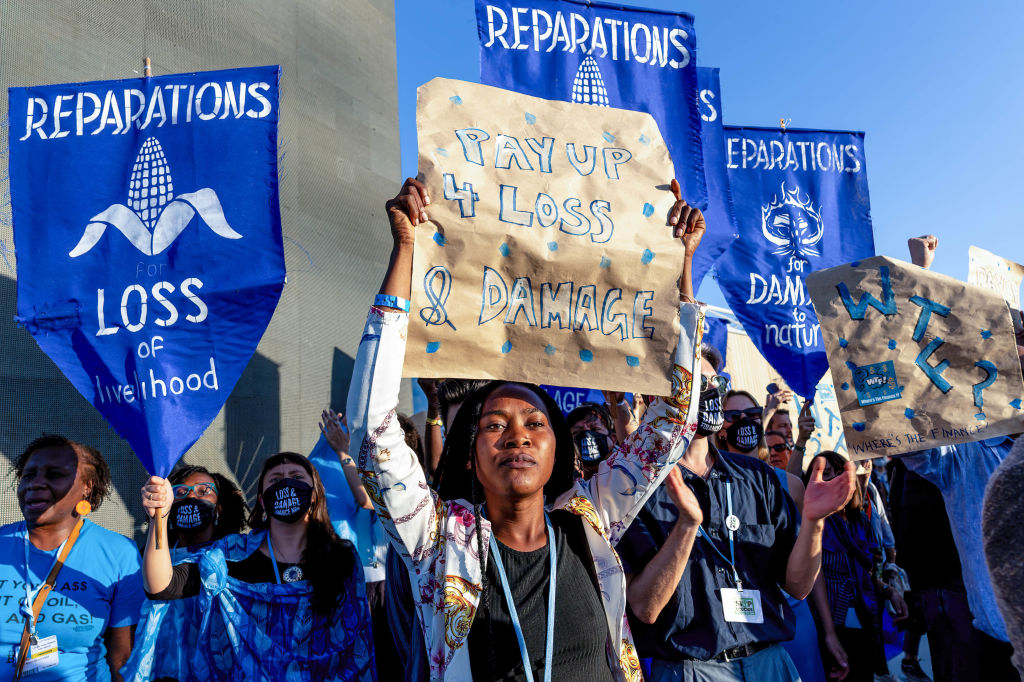
Activists demand loss and damage reparations on the fifth day of the COP27 UN Climate Change Conference, held by UNFCCC in Sharm el Sheikh International Convention Center. (Dominika Zarzycka / SOPA Images / LightRocket via Getty Images)
As officials at the United Nations–led climate summit in Sharm el Sheikh, Egypt, grapple with calls to create an international fund to cover the cost of climate disasters, wealthy nations who are dodging calls to pay for global damage caused by their emissions should look to the past to understand why such reparations are justified and even politically advantageous. Most specifically, they could take inspiration from Germany’s efforts to repair historical wrongs.
At the 27th Conference of the Parties to the United Nations Framework Convention on Climate Change, or COP27, negotiators from nearly two hundred countries are for the first time actively discussing funding for “loss and damage,” the global costs of climate change–fueled disasters, which are pegged at $290-580 billion per year in developing countries alone.
As protesters outside the summit demanded, “It’s time for the global north to pay for their responsibility,” ministers at the event from Austria and New Zealand together pledged more than $60 million for new loss and damage efforts. But experts say far more money is needed to address the problem — as is buy-in from wealthy countries like the United States, which has so far abstained from any commitment.