How the Green New Deal Can Deliver Land Justice
Land is a source of both enormous wealth and horrendous inequality. The Green New Deal can reverse historic injustices while pushing agriculture into the sustainable, low-carbon future.
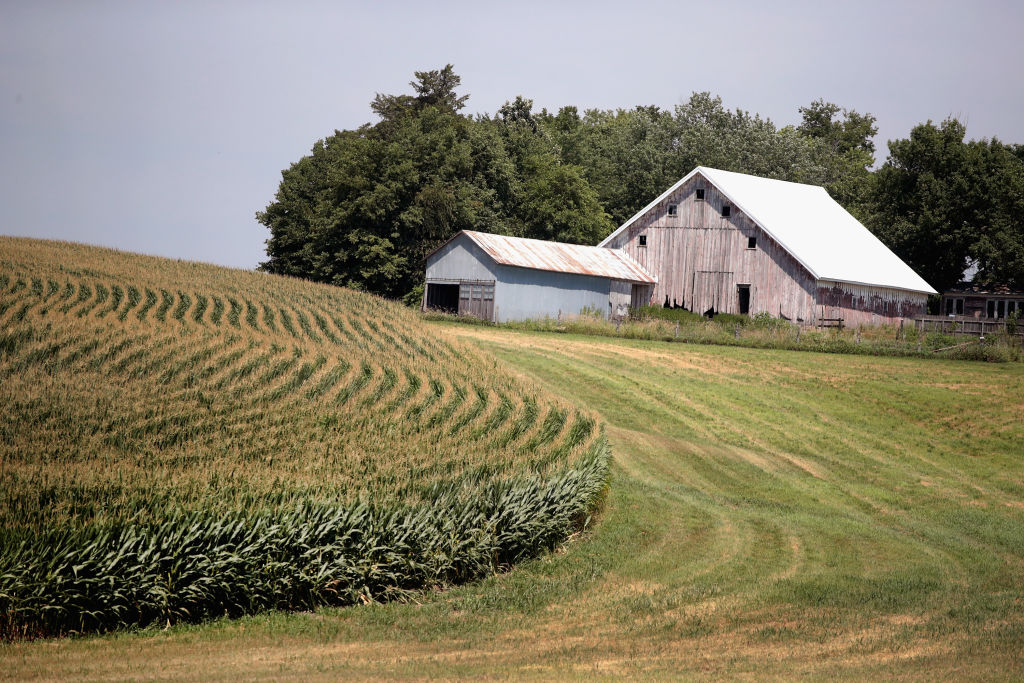
Corn grows on a farm on July 13, 2018 near Amana, Iowa.Scott Olson / Getty
In 2013, when brandon king and others launched Cooperation Jackson — a radical project to bring economic democracy and worker ownership to Jackson, Mississippi — they decided to put their funds toward purchasing land instead of paying themselves salaries. “We were renting just to have a space for meeting — that’s completely not sustainable,” said king, who spearheads the group’s sustainable urban farm cooperative. Added his colleague Sacajawea Hall: “We needed to acquire and also be thinking about land ownership in a collective way. I don’t think it was ever a question.”
For Cooperation Jackson, the question of land — who owns it, manages it, and accesses it — is at the heart of the climate crisis, and a major source of wealth and inequality. It is also essential for ensuring that our sustainable, low-carbon future — the future envisioned by the Green New Deal (GND) — is a just one.
Agriculture contributes 9 percent of US carbon emissions and, by one estimate, a third of global greenhouse gas emissions, largely from livestock, refrigeration, and chemical fertilizers and pesticides. These emissions are a product of the model of industrial monoculture farming, which maximizes profits by growing a single crop, like soy or corn, over vast swaths of land. The Green New Deal is calling for the elimination of “pollution and greenhouse gas emissions from the agricultural sector” by “investing in sustainable farming” and “building a more sustainable food system that ensures universal access to healthy food.”