Traumas of Dispossession
We're living through another crisis of American family farming. But don't expect a rural revolt any time soon.
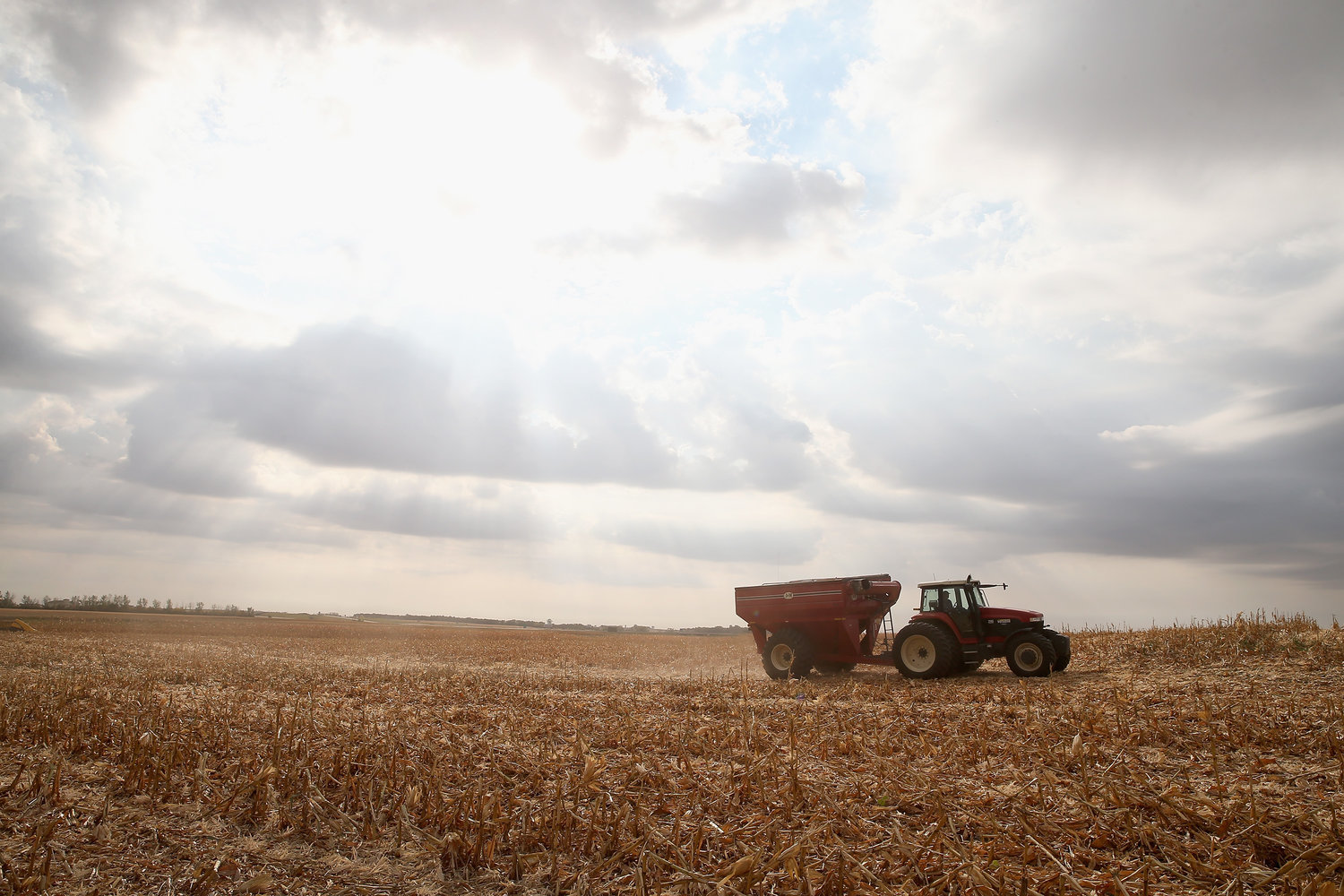
Dave Fendrich helps Bryant Hofer harvest a field of corn on October 2, 2013 near Salem, South Dakota.Scott Olson / Getty
Where are Willie Nelson, John Mellencamp, and Neil Young now? A generation ago, these musicians came together to found Farm Aid in 1985 and host a star-studded benefit concert that awakened the nation to the worst agricultural crisis since the Great Depression. Yet today, as a perfect storm of similarly adverse conditions gathers across the country, celebrities such as these are nowhere to be found.
Nonetheless, as tariff threats mount in Donald Trump’s escalating trade war with China, America’s farmers once again find themselves at loggerheads with national policy priorities. Not since Jimmy Carter’s grain embargo weaponized food in response to the Soviet Union’s invasion of Afghanistan has the fate of rural communities hung so precariously in the balance.
That 1980 policy blunder compounded an unspooling foreclosure crisis that had already given rise to the American Agriculture Movement, a grassroots coalition of family farmers best known for their iconic “tractorcades” — most memorably those that led three thousand farmers to drive their tractors to Washington, D.C. in the winter of 1979.