Wall Street Is to Blame for the Water Crisis in Jackson, Mississippi
The water crisis in Jackson, Mississippi, wasn’t the product of government mismanagement. It was the result of Wall Street jacking up the city’s interest rates, which left residents with decaying infrastructure that couldn’t even deliver clean water.
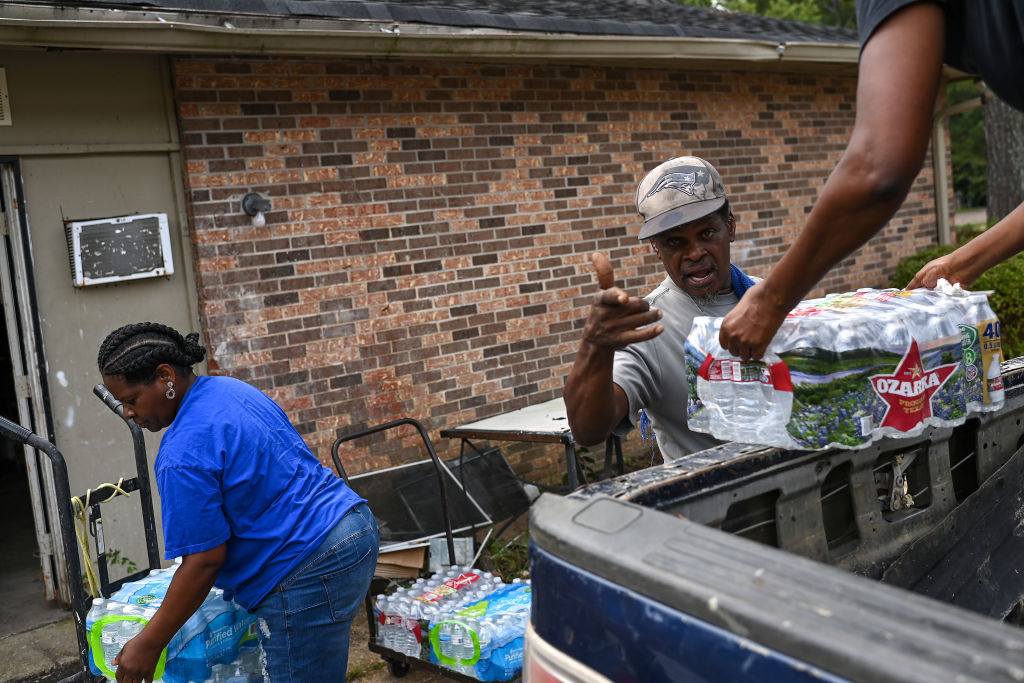
Rodney Moore, maintenance supervisor at Addison Place apartments, receives cases of bottled water from City of Jackson workers for elderly and disabled residents on September 3, 2022 in Jackson, Mississippi. (Joshua Lott / Washington Post via Getty Images)
In August, clean water stopped flowing from residents’ taps in Jackson, Mississippi. The crisis lasted more than six weeks, leaving 150,000 people without a consistent source of safe water. The catastrophe can be traced back to a decision by a credit ratings agency four years ago that massively inflated the city’s borrowing costs for infrastructure improvements, most notably for its water and sewer system.
In 2018, ratings analysts at Moody’s Investors Service — a credit rating agency with a legacy of misconduct — downgraded Jackson’s bond rating to a junk status, citing in part the “low wealth and income indicators of residents.” The decision happened even though Jackson has never defaulted on its debt.
Moody’s move jacked up the price of borrowing for Jackson, costing the cash-strapped city between $2 and 4 million per year in additional debt service costs — a massive financial roadblock to officials’ plans to fix the municipality’s aging water system. And since the state of Mississippi and the federal government refused to use their powers to address the city’s infrastructure problems, that meant Jackson was essentially powerless to stop the impending catastrophe.