Public-Service Broadcasting Is a Noble Ideal, but the BBC Needs Radical Change
The BBC marked its centenary this week, but its long-term future is deeply uncertain. We should defend the idea of public-service broadcasting while sharply criticizing the BBC in its current form for its conservativism and deference to the British state.
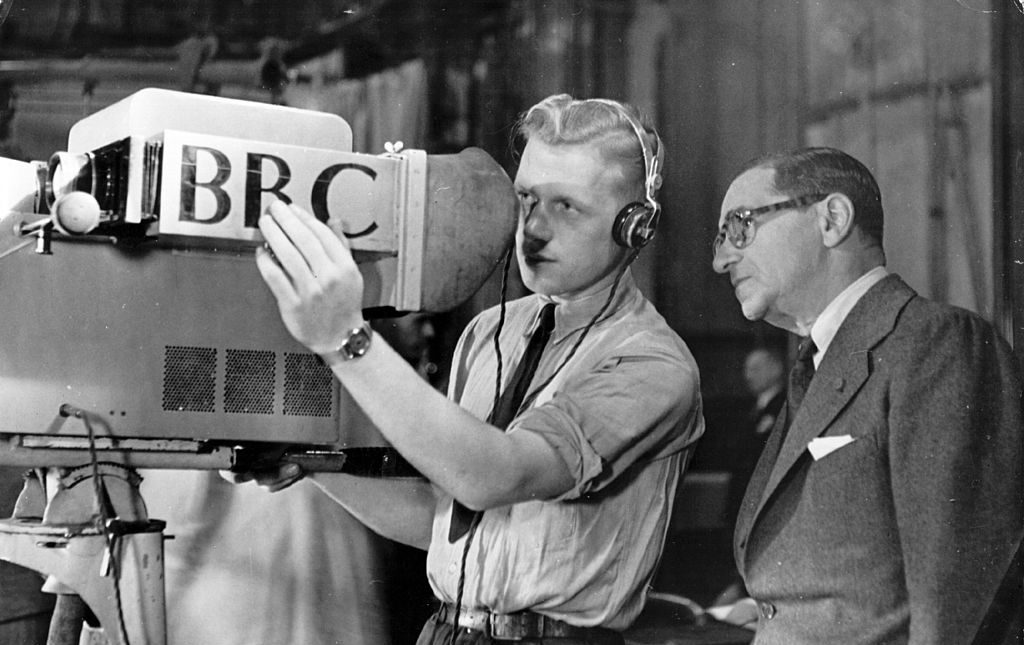
A BBC cameraman explains the technicalities of the television camera to composer Irving Berlin in 1946, before the broadcasting of a program about him. (George Konig / Keystone Features via Getty Images)
No broadcaster in the world today can rival the cultural prestige of the UK’s British Broadcasting Corporation (BBC). From nature documentaries to period dramas, its programs are watched by a global audience. In Britain itself, the news reporting of the BBC is by far the most trusted source of information about current affairs.
But the company that established a template for public-service broadcasting has come under aggressive scrutiny in recent years. Critics have accused the BBC of using its reputation to peddle propaganda. Now it faces a challenge to the funding model that has sustained it since the 1920s.
This is an edited transcript from Jacobin Radio’s Long Reads podcast. You can listen to the episode here.