The Gonzo Weimar Germany of George Grosz
Between the 1920s and the 1950s, the German painter George Grosz went from being Vladimir Lenin’s favorite modern artist to a bitter illustrator in American exile. In between, he drew some of the fiercest caricatures of capitalist society ever seen.
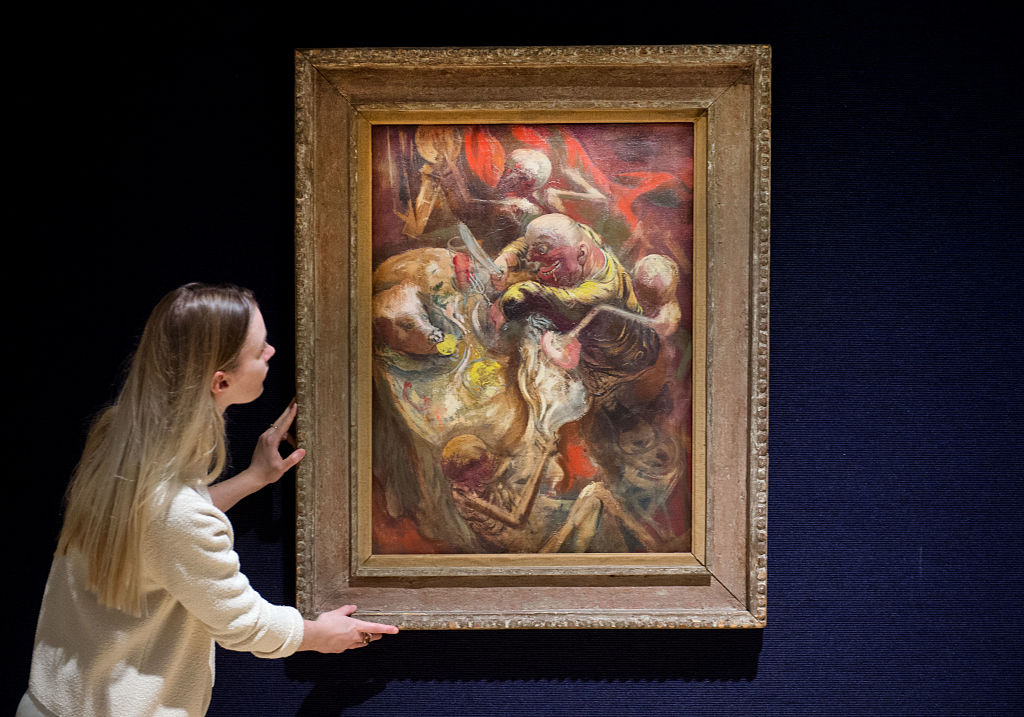
Fairy Tale by George Grosz at the Impressionist and Modern Art auction taking place on February 3, 2015, at Bonhams in London. (Zak Hussein / Corbis via Getty Images)
Mainstream art history oftentimes downplays or even deliberately obscures leftist political allegiances of the early twentieth-century artists. This is not the case for George Grosz. A fearless communist in the early 1920s, he tirelessly strove to distance himself from communist politics later in his life.
The key figure of the Dada and New Objectivity movements, the pioneer of photomontage, and an experimental costume designer, Grosz is most famous for his bitter political caricatures. Traumatized as an infantryman by a short exposure to World War I’s battlefields, Grosz filled his drawings and paintings with fullhearted hatred and disgust of Germany’s militarist and nationalist elites and idling middle classes.
If judged by Grosz’s works, Weimar-period Berlin was exclusively populated by ugly men and women indulged in an endless carousel of greed and lust. His most common urban types were exposed prostituted women, disgusting pimps, and respectable ladies and gentlemen with the pronounced features of decomposition on their enlightened faces.