By Failing to Transform the Philippines, Liberals Paved the Way for the Reactionary Right
Ferdinand Marcos Jr, son of the former dictator, won a crushing victory in this year’s Philippine presidential election. Responsibility for this disaster lies with the liberal politicians who failed to carry out the most basic social reforms while in power.
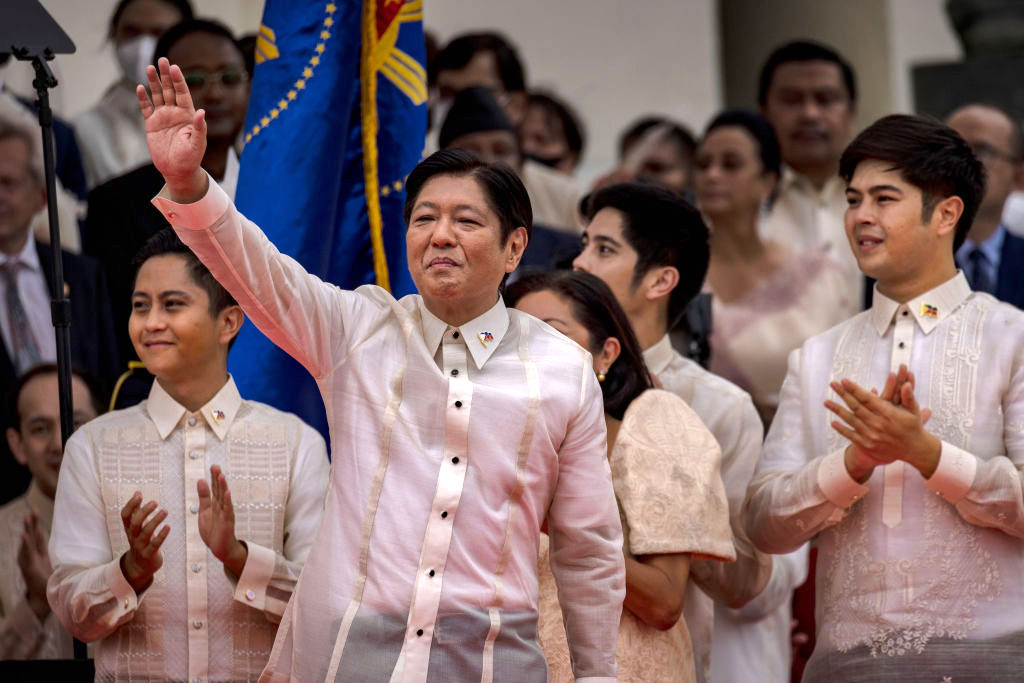
Ferdinand “Bongbong” Marcos Jr waves to supporters after taking his oath as the next president, at the National Museum of Fine Arts on June 30, 2022 in Manila, Philippines. (Ezra Acayan / Getty Images)
In 1986, President Corazon Aquino of the Philippines found herself facing a difficult dilemma. She had just been sworn in as head of a self-proclaimed “revolutionary” government following the success that year of the People Power Revolution, as the mass uprising which took down the dictatorship of Ferdinand Marcos Sr was dubbed. However, as Aquino prepared to work, she found that Marcos and his cronies had emptied the public coffers.
Worse still, banking officials from Wall Street kept calling, demanding that her government pay back the US$27 billion they had lent the Philippines. A failure to comply would mean incurring huge losses for the country’s economic elite — of which Aquino herself was a part — as their access to credit would dry up and the value of their stocks would plummet.
On the other hand, going along with the demands for payment would mean there was little left to spend on social welfare or employment generation as millions of Filipinos reeled from the deepest recession their country had experienced since World War II. Would Aquino stand up to the banks and refuse to pay — or would she cave in?