How the Philippines Were Crucial to the Making of American Empire
From its vicious occupation in the early 20th century to its military bases in the present, the US has long had a brutal, domineering relationship with the Philippines. And crucially, it’s depended on the labor of colonized Filipinos themselves.
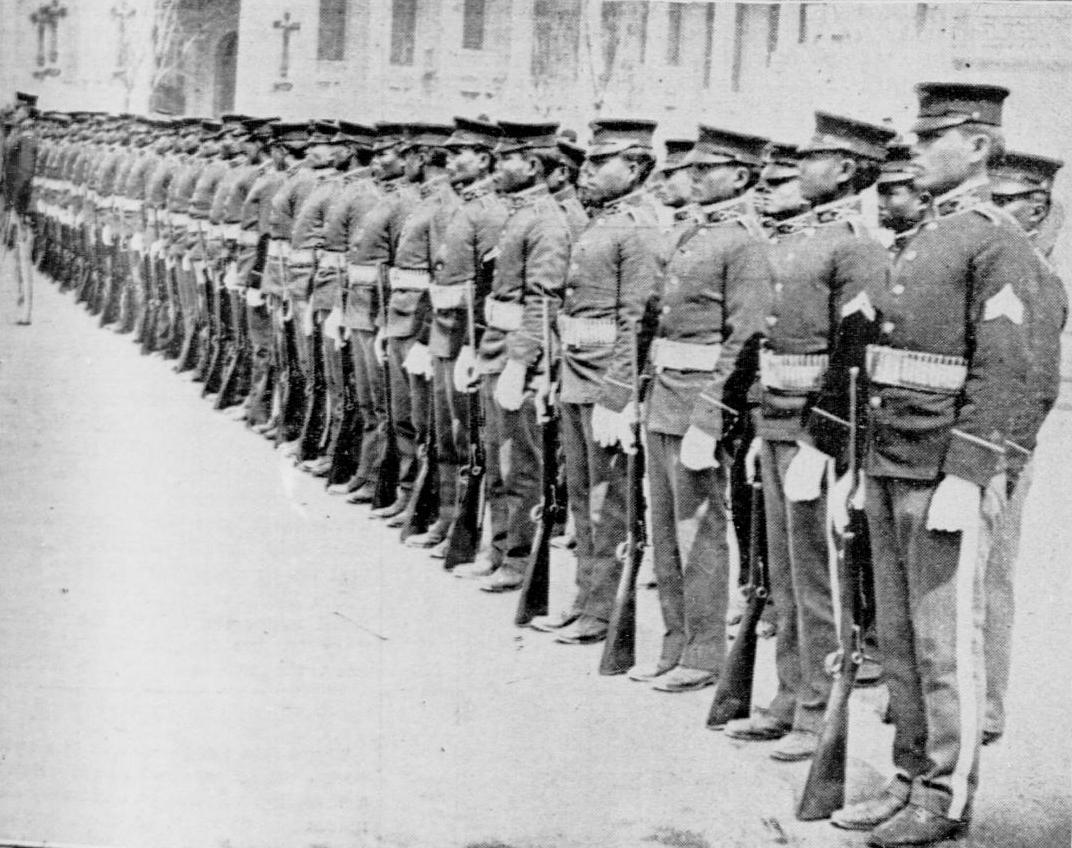
Philippine Scouts, a unit of the US Army blamed for mass killings and torture, in formation in 1905. (Library of Congress)
In 1936, as the Great Depression overwhelmed the world and the threat of global war loomed, the United States aimed to build up military forces in the Philippines, its colony since 1898. Two years earlier, the United States had placed the Philippines on a ten-year path to independence under the Tydings-McDuffie Act. But independence demanded a Filipino, not US, army to defend the nation. The Americans expected to conscript ten thousand Filipinos for service in the Philippine Army, enticing them with the promise of a job.
Douglas MacArthur, a US Army general whose austere countenance concealed his obvious ego, led the effort as field marshal of the Philippine Army, wielding near-dictatorial power over the Philippines’ military and, soon, their political affairs. Yet when the Japanese invaded in January 1942, MacArthur’s efforts proved in vain — Japanese forces overwhelmed MacArthur and the Philippine Army in twelve weeks.
After MacArthur’s expulsion from the Philippines, his army remained, its troops scattered across the country. Some soldiers fought on behalf of the Americans, some allied with the Japanese. Others joined communist guerilla units to drive out both powers. MacArthur infamously vowed to return to the Philippines to reclaim victory — and he did in 1944. This time, MacArthur and the Americans overpowered the Japanese. Philippine independence, postponed by the Japanese occupation, became a reality in 1946.