Socialist President Xiomara Castro Is Trying to Revive Democracy in Honduras
Honduras's new leftist president, Xiomara Castro, was inaugurated in January. In her first few months in office, she's prioritized dismantling the decade-long right-wing dictatorship’s anti-labor, pro-capital agenda.
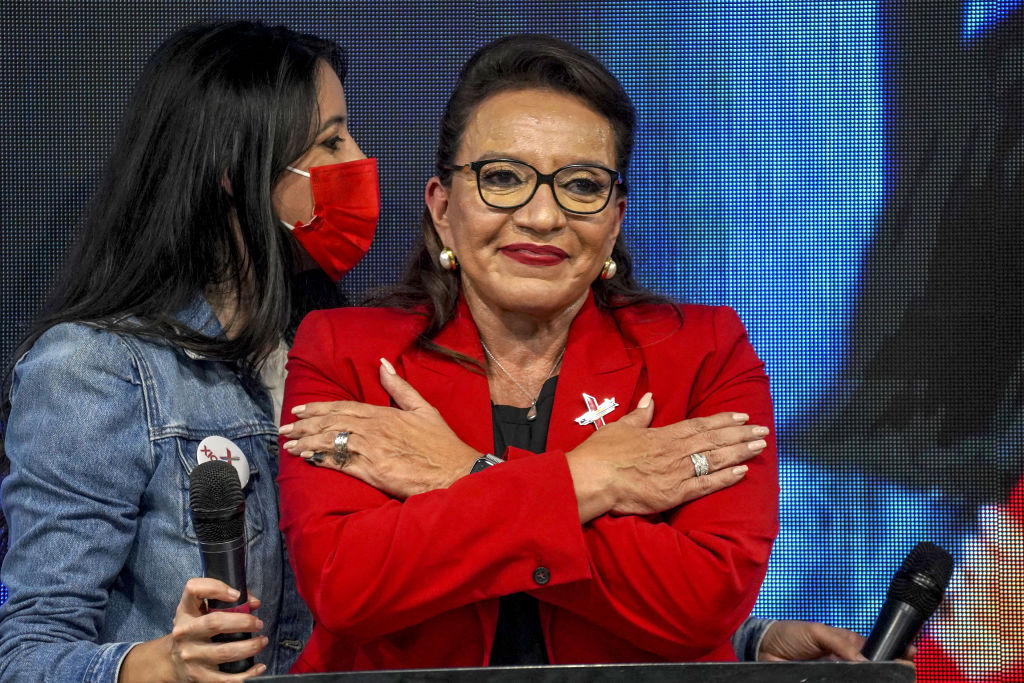
President of Honduras Xiomara Castro during a press conference on November 28, 2021 in Tegucigalpa. (Aphotografia / Getty Images)
In January 2022, Xiomara Castro became Honduras’s first woman president, restoring electoral democracy to the country after more than a decade of dictatorship. Running with the leftist Liberty and Refoundation (LIBRE) party, Castro’s election breaks with the century-old two-party system that traded power between elites in the establishment National and Liberal Parties. With a mandate for transformation and high popular expectations, Castro faces significant challenges in a context of profound systemic crisis.
The 2009 military coup that ousted Castro’s husband, democratically elected president Manuel Zelaya of the Liberal Party, plunged Honduras into chaos. The ensuing far-right regime was sustained by military force and brazen electoral fraud. The original “Banana Republic” became a laboratory for radical new modes of appropriation and enclosure, with public services and resource-rich territories auctioned off to the highest bidder. Social movement leaders met escalating repression, including the high-profile execution of renowned indigenous activist Berta Cáceres in 2016. The private interests of public officials, extractive capital, and narcotraffickers became indistinguishable. In the face of mounting displacement, insecurity, and inequality, impoverished Hondurans fled to the United States in unprecedented numbers.
LIBRE was formed in 2011 out of the National Popular Resistance Front, which was forged in the anti-neoliberal struggles of the previous decade and challenged the dictatorship in the streets. Militant peasant, indigenous, and labor movements were essential to LIBRE’s victory, but Zelaya’s liberal faction is the dominant force in the governing coalition. Popular organizations must now navigate the pitfalls of demobilization and co-optation as they seek to hold the new government to its promises while fending off destabilization from the Right.