Ireland’s Civil War Ended in Victory for the Irish Counterrevolution
A hundred years ago today, the Irish Civil War began in Dublin. Its outcome entrenched the power of an ultraconservative bloc whose leaders ruthlessly snuffed out hopes that Irish independence would result in social transformation for workers and women.
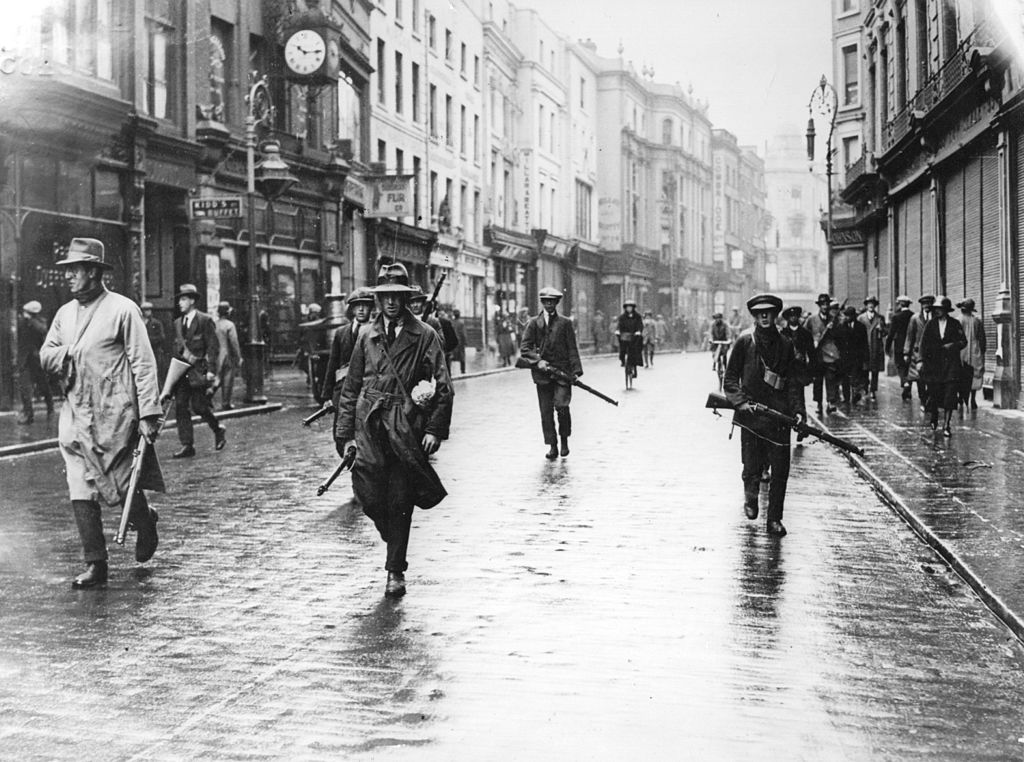
Armed anti-Treaty members of the Irish Republican Army (IRA) in Grafton Street, Dublin during the Irish Civil War. (Walshe / Getty Images)
On June 28, 1922, Irish Free State forces, under pressure from the British government, opened fire on the anti-Treaty garrison in Dublin’s Four Courts, thus beginning the Irish Civil War. It was a bitter and tragic breach within the Irish revolutionary forces that had successfully fought a war against the British state over the previous years.
While the Civil War was not a class conflict in any straightforward sense, it was strongly marked by the social upheavals of Ireland’s national revolution. The most conservative elements in Irish society rallied behind the Free State and saw the republicans who opposed the Anglo-Irish Treaty as a threat to the established order. After a decisive victory for the pro-Treaty side, the leaders of the new state turned it into a bulwark of social reaction, with consequences still felt in Ireland today.
From Truce to Treaty
In December 1918, Sinn Féin (We Ourselves) had swept the board in the Irish constituencies of the UK general election. The next month, its deputies declared an independent parliament in Dublin, Dáil Éireann. The creation of ministries and courts soon followed, while the Irish Republican Army (IRA) began a campaign of guerrilla war against British crown forces.