Britain’s Anti–Trade Union Laws Are Being Used Against Striking Rail Workers
As British rail workers continue their strike, Tories are trying to force scabs to replace strikers. They only reason they might be able to get with it: Britain’s many laws that are rigged against workers and organized labor.
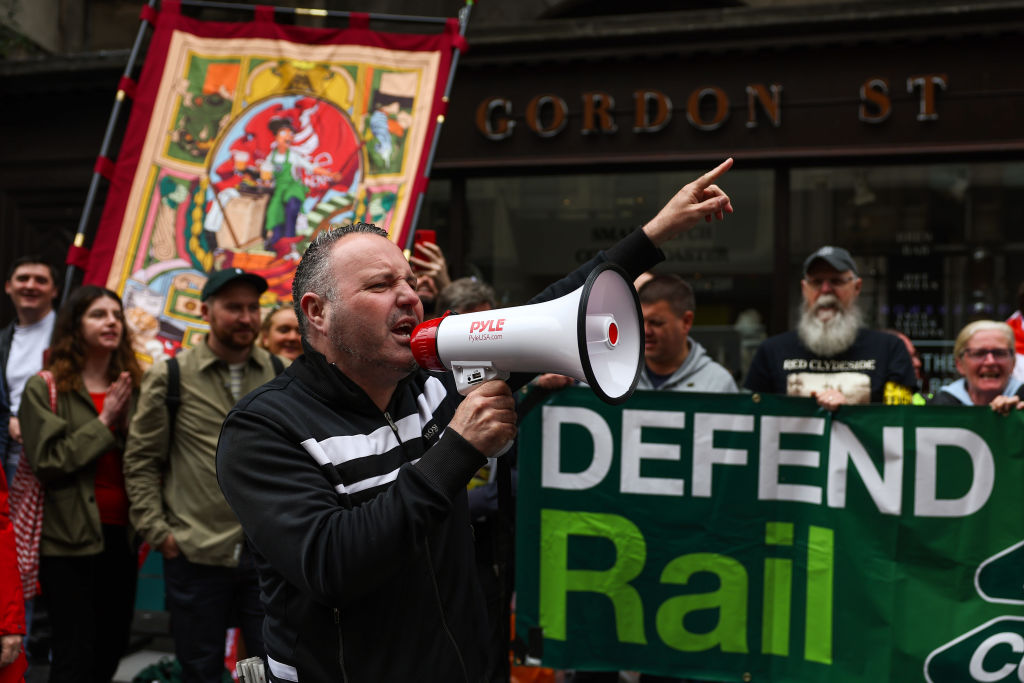
The biggest rail strikes in thirty years started on Monday night continuing this Thursday, with trains cancelled across the UK for much of the week. (Jeff J Mitchell / Getty Images)
As the RMT strike began, and viewers could see for themselves how effective the union has been in mobilizing its members, the government responded with news that it would change the law in order to make it harder for unions to win. At present, it is unlawful for agency employers to supply workers to take over the duties of striking workers. The agencies do not want to be used as strikebreakers, but the government insists that they can and will be.
It is remarkable how easily this government changes the law to help bosses, and yet how hard they find it to change the law to help workers, even where they have promised to do just that. As long ago as December 2019, the government pledged in the Queen’s Speech to introduce a bill which would “enhance workers’ rights, supporting flexible working, extending unpaid carers’ entitlement to leave and ensure workers keep their hard-earned tips.”
The bill was supposed to implement the findings of of the government-commissioned Taylor Report, which held, for example, that agency workers should have the right to request direct employment with their employer. That was never a generous policy; all that workers were promised was a right to ask. Even if it had been granted, employers would still have been free to say that it suited them to keep workers at arms’ length, and to deprive them of their rights. That promise was, however, widely reported in the press, earning the government favorable publicity, and was presented as a pillar of the Conservatives’ plans to “level up” Britain. Two and a half years later, it has been quietly dropped.