We’re Going to Defend Our Unions
Another Tory government means another wave of attacks on UK unions, beginning with transport workers. There's only one way to respond: building a mass movement that can fight for workers' rights — and take industrial action over any issue a workforce sees fit.
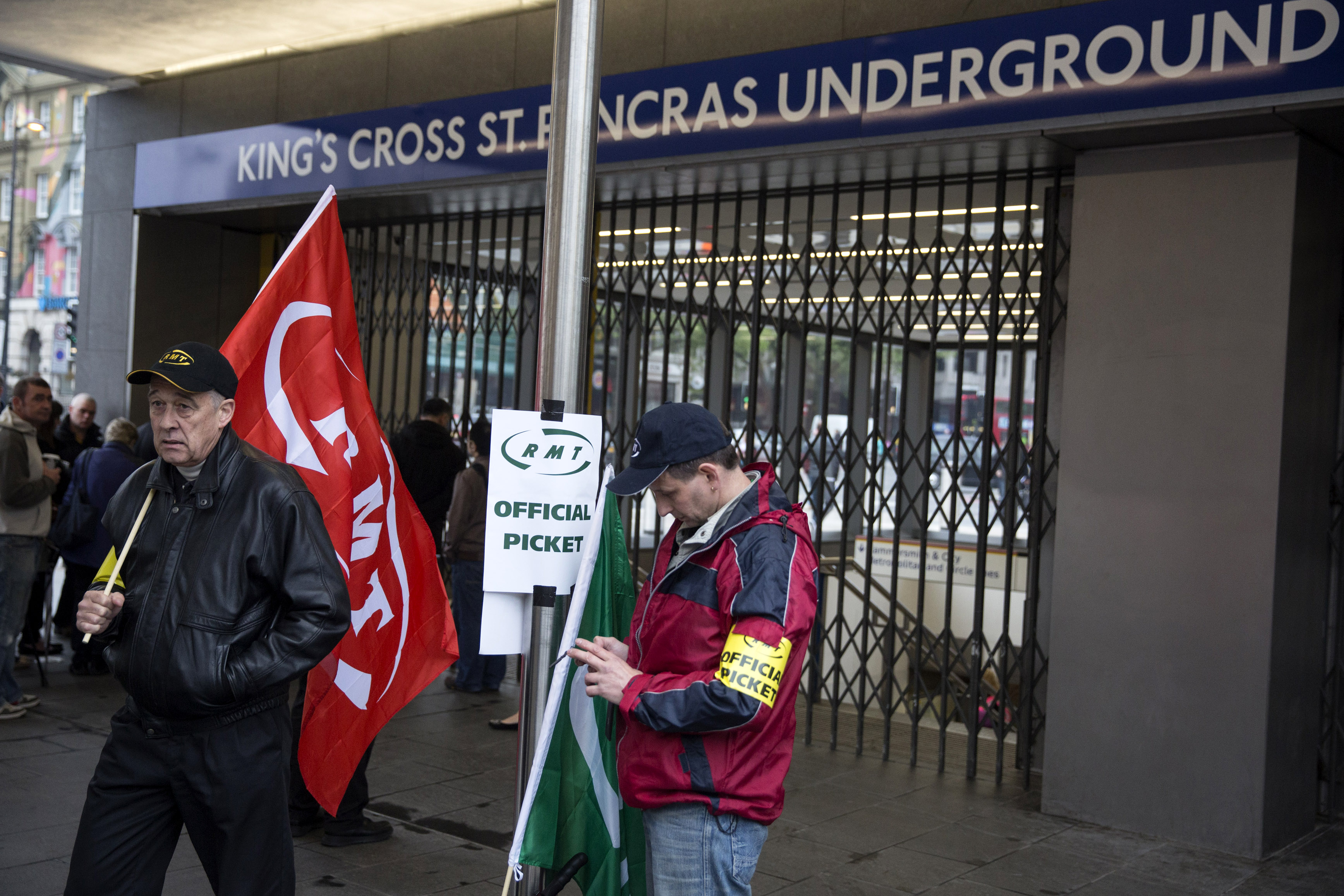
Members of the National Union of Rail, Maritime and Transport Workers (RMT) hold a picket line outside the entrance to the London Underground at King’s Cross station on April 29, 2014 in London, England. (Oli Scarff / Getty Images)
Parliament is back for the first time since the general election. We now face nearly five years of a Johnson government — but with an election manifesto thin on detail, what can we expect?
We saw hints in the Queen’s Speech: “To ensure people can depend on the transport network, measures will be developed to provide for minimum levels of service during transport strikes.” Blink and you miss it, but this rather innocuous sentence conceals worrying implications for workers’ rights. The new government is attempting to bolster its own power by diminishing the collective power of workers. Initially impacting transport workers, there is a real threat to the entire union movement.
In 2015, Sajid Javid — then secretary of state for business, innovation, and skills — put forward a bill imposing severe limitations on the power of trade unions. The original bill suggested some draconian restrictions, including allowing agency workers to replace striking workers; restricting unions’ use of social media; and requiring unions to provide picket plans to police and employers two weeks in advance of strike action. These more draconian aspects of the bill were dropped when it was eventually passed into law, but the act did introduce a requirement that for a strike to be legal, 50 percent of union members must vote for it in a ballot. The new government’s proposed approach looks like a return to form.