How Migrant Workers From the Philippines Power Modern Capitalism
Millions of Filipino workers travel abroad each year to labor in dangerous, exhausting, and unregulated conditions. Scattered throughout the world, these hyperexploited workers have been delivered by the Philippine state to serve the needs of foreign powers.
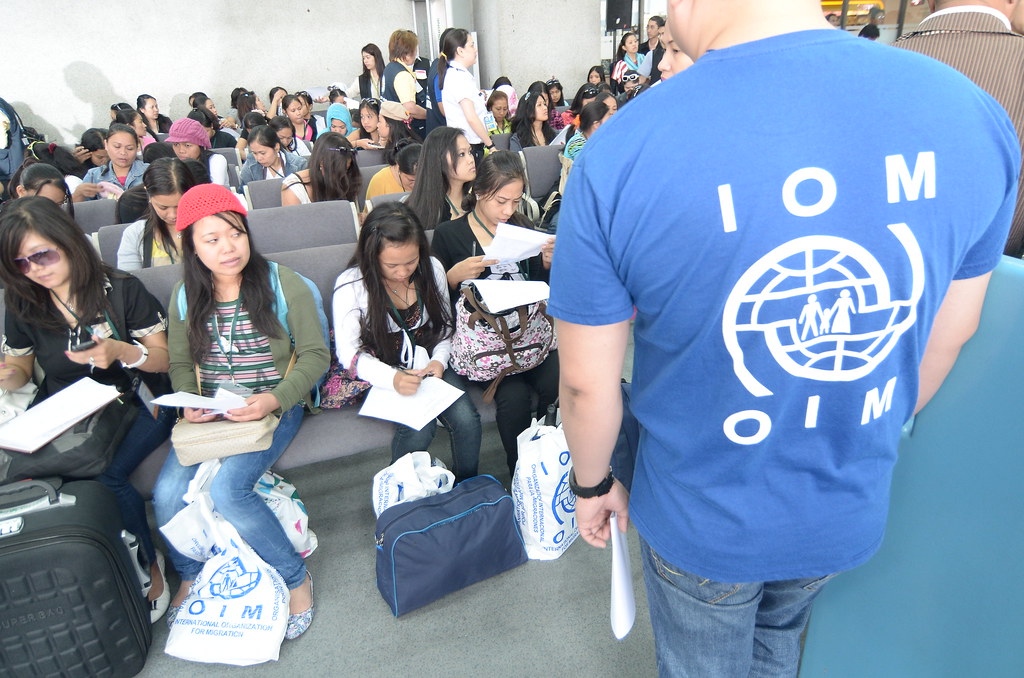
A United Nations International Organization for Migration staff member interviews returning Filipino migrant workers after their arrival in Manila, the Philippines. The Filipino nationals had arrived from Damascus, Syria, on September 11, 2012, on an IOM-chartered plane. (IOM / Flickr)
The presidential elections in the Philippines last week cemented an outcome many had feared. Ferdinand “Bongbong” Marcos Jr (BBM) won the top job as the nation’s president, set to take the helm in June. His election revives memories of his father’s dictatorship in the 1970s and ’80s. Sara Duterte, daughter of the current president, won the vice-presidential role, suggesting that the violent rule of her father is set to continue.
Throughout the election, much has been made in the international media about the hold of elites like the Marcos family on the nation’s politics. Despite promises to “work in harmony,” these elites seem to lack any cohering vision beyond nepotism. Their real strength lies in the myriad divisions of the Filipino working class. Workers in the Philippines experience grueling labor conditions in urban areas, lead impoverished and precarious lives in the countryside, and have been subject to labor-export policies for almost fifty years.
It is with this last condition that readers in the Global North will be most familiar. Millions of Filipinos work in exhausting, dangerous, and often unregulated conditions across a range of global industries. The remittances these workers send home now represent a startling 8.9 percent of the country’s GDP. But how did this unique situation come about, and why is the new president suggesting he will expand this system?