The Chilean Right Made Colonia Dignidad Possible
Chileans have long known about Colonia Dignidad, a German colony in Chile depicted in the Netflix series A Sinister Sect whose settlers committed countless acts of pedophilia, murder, and torture. Less discussed: the Chilean right’s complicity in those crimes.
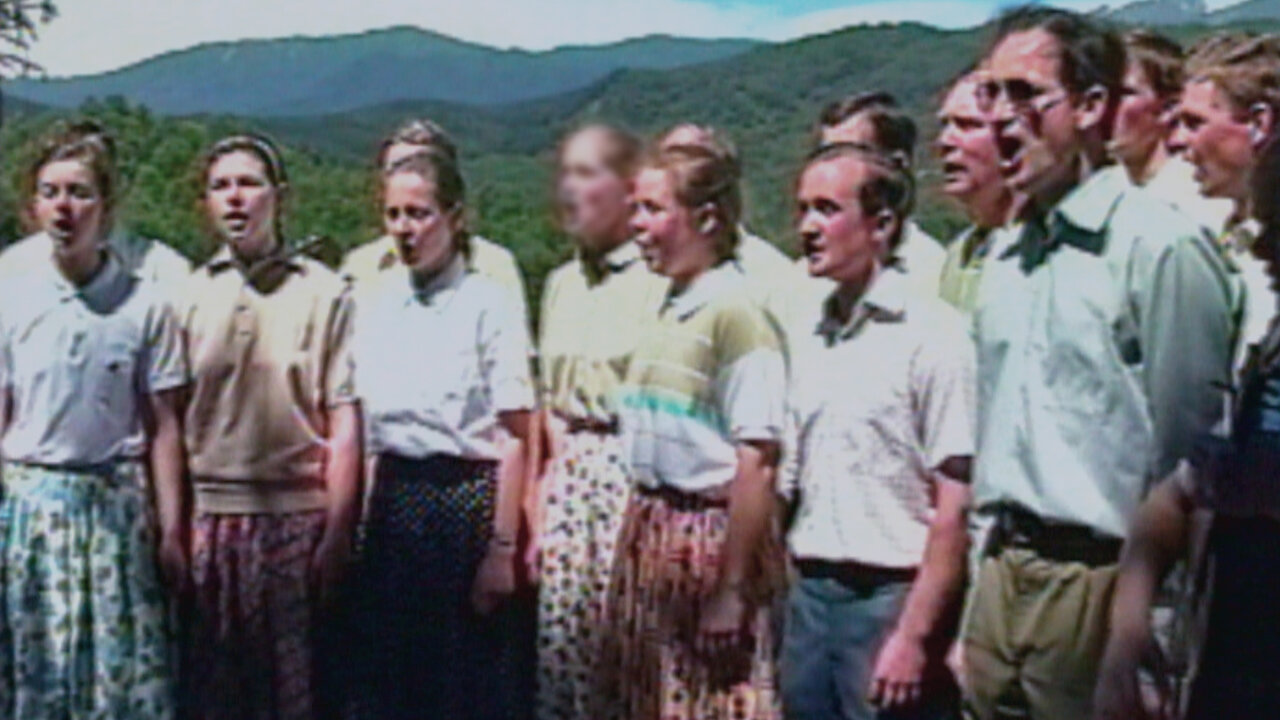
Historical footage from A Sinister Sect (Netflix).
The Netflix miniseries A Sinister Sect is a welcome effort to familiarize international audiences with the infamous story of Colonia Dignidad, a colony of German settlers located in Southern Chile. Since the mid-1960s the average Chilean has known about the Colonia Dignidad and its history of atrocious criminal acts, including pedophilia, murder, and torture. Now, thanks to the research and archival work of directors Wilfried Huismann and Annette Baumeister, the rest of the world, too, can learn about the history of one of the darkest episodes in recent Chilean history.
A Sinister Sect chronicles the sect’s history from its founding in 1950s West Germany until 2005, when its charismatic leader, Paul Schäfer, was arrested and imprisoned. Across six episodes, the viewer is privy to a bizarre chain of events: starting with Schäfer’s conviction for assaulting two children in Germany in 1961, the cult figure and some three hundred of his followers fled to Chile, settling an agricultural colony at the foothills of the Andes mountains some 400 kilometers south of the capital, Santiago. Beyond the German authorities’ reach, the colony quickly found that it also enjoyed an extrajudicial status within Chile, allowing Schäfer to design his community as a nightmarish “pedophile paradise,” in the words of one of his victims.
To make matters more bizarre, in the 1970s, Schäfer developed a close relationship with the dictatorship of Augusto Pinochet, offering the colony as a secret detention center where the regime could torture and assassinate Chilean citizens. Not only was Schäfer personally involved in the killing of prisoners, we learn, but he burned and disposed of the victims’ remains — “disappearing” them forever. As the series effectively illustrates, there was hardly a brand of criminality — corruption, collusion, illegal arms sales, conspiracy against an elected government, witness intimidation — that Schäfer’s colony did not master. Perhaps most shocking of all is the fact that the extrajudicial state of affairs continued after Chile’s transition to democracy in 1990, thereby making the process of bringing Schäfer to justice all the more difficult.