After Buffalo, Great Replacement Theory Isn’t Going Anywhere
After the mass shooting in Buffalo, don’t expect conservative leaders to stop promoting the “great replacement theory” that inspired the gunman. It’s too useful for the Right’s antidemocratic agenda.
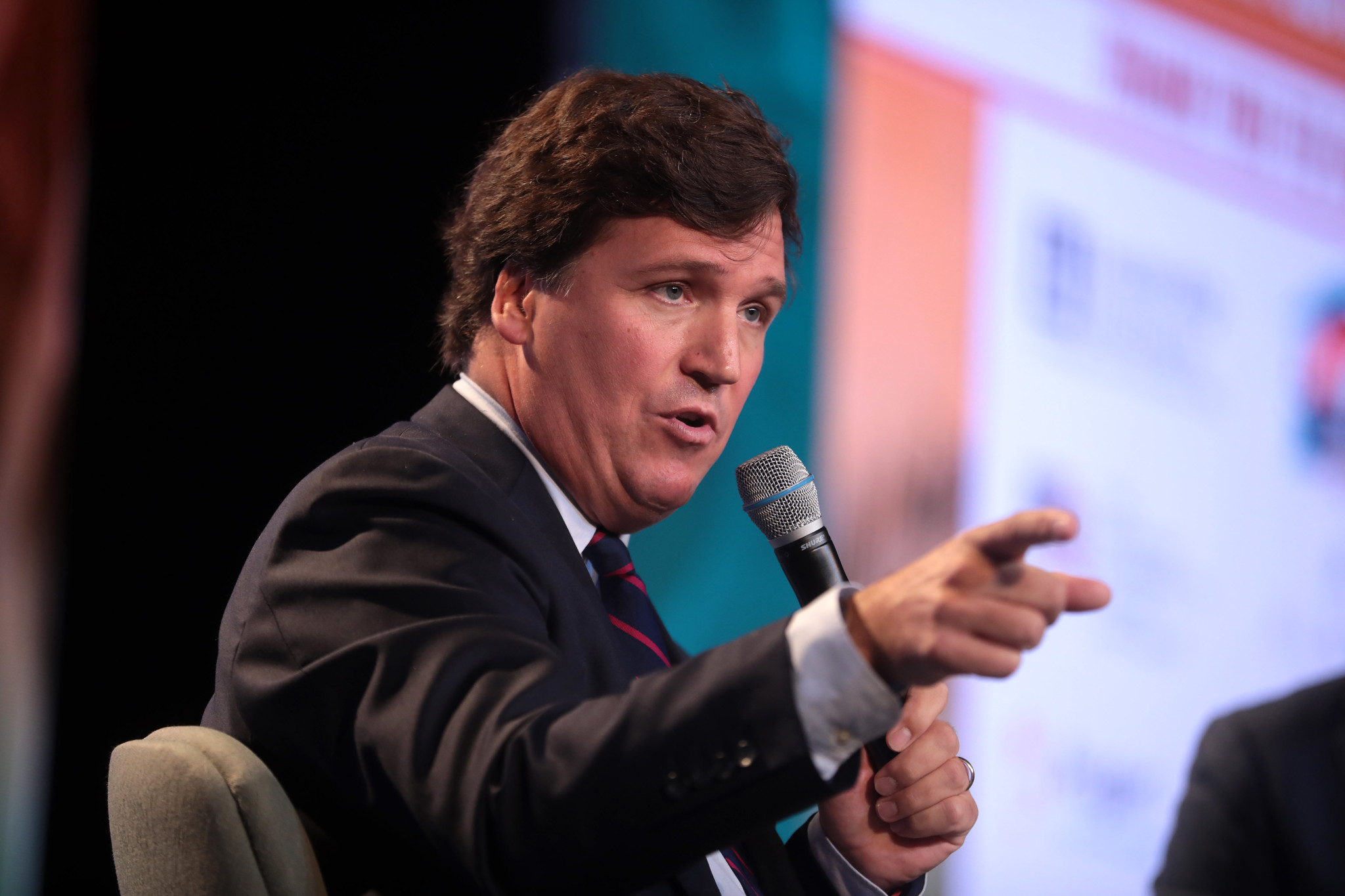
Fox News host Tucker Carlson has constantly brought the “great replacement theory” into the homes of millions of nightly viewers. (Gage Skidmore / Flickr)
On Saturday, a gunman opened fire in a supermarket in a black neighborhood in Buffalo, killing ten people. The eighteen-year-old alleged gunman, Payton S. Gendron, is said to have scrawled racial slurs onto the barrel of his gun and to have published a racist manifesto that runs into the hundreds of pages. Gendron seems to have placed a special emphasis on “great replacement theory,” the right-wing belief that “elites” are deliberately trying to replace white Europeans and Americans with immigrants and other people of color.
Once relegated to the fringes, great replacement theory has made its way to the mainstream of the conservative movement, with a third of respondents in one poll saying they believed in it. Fox News host Tucker Carlson, in particular, has constantly brought the conspiracy theory into the homes of millions of nightly viewers, as the New York Times has extensively documented. The Times also cites numerous elected officials who have espoused some version of great replacement theory.
But while many articles in the Times and elsewhere have addressed the mainstreaming of the repugnant great replacement theory, fewer have addressed how it fits into the broader antidemocratic right-wing agenda. (Matthew Cunningham-Cook in Jacobin and Keeanga-Yamahtta Taylor in the the New Yorker are notable exceptions.) Great replacement theory is, at bottom, a tool for increasingly unpopular conservative elites to justify to their base the use of increasingly extreme, antidemocratic, and yes, occasionally violent measures to maintain their power.