Australia Helped Indonesia Cover Up Atrocities in East Timor
After East Timor declared independence from Portugal in 1975, Indonesian dictator Suharto ordered an invasion and tried to crush the national liberation movement. Australia knew Indonesian forces were carrying out massacres — and helped hide it from the world.
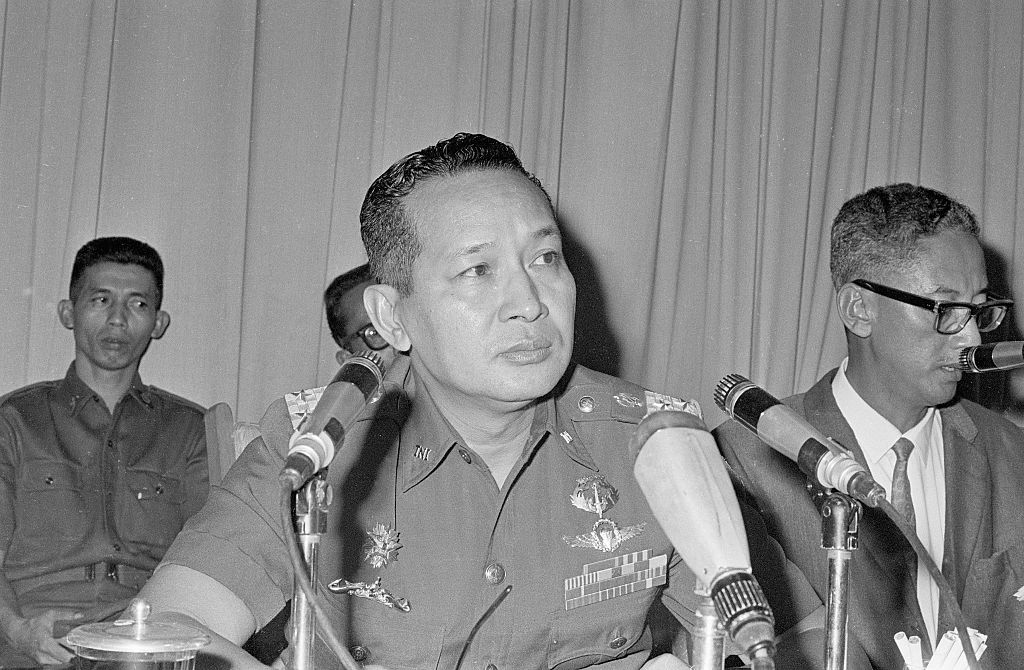
Suharto speaking to the press in Jakarta, Indonesia, 1966. (Bettman / Getty Images)
In the aftermath of the Portuguese revolution of 1974, a process of decolonization took place across the Iberian nation’s former colonies. Among them was East Timor, which declared its independence in 1975. Led by leftist party, the Revolutionary Front for an Independent East Timor (FRETILIN), East Timor immediately faced the wrath of Indonesia’s Suharto regime and its Western allies.
The Suharto regime had come to power in Indonesia in 1965 and, with US backing, had carried out a massacre of the country’s left that claimed up to a million lives. Before East Timor’s declaration of independence, Suharto’s regime had been undermining the decolonization process for years; when East Timor became its own nation, the Indonesian military promptly invaded, ultimately leading to annexation in May 1976. The Suharto regime’s official narrative was that Indonesia intervened only reluctantly in a Timorese civil dispute, with its military acting as a peacekeeping force.
A key ally of Suharto at the time, the Australian government helped do Indonesia’s bidding. Among other things, this meant criticizing Australian activists who relayed stories of starvation, cruelty, and murder following East Timor’s annexation. One of these activists, Peter Job, has since pored over declassified documents proving that Australian politicians and civil servants lied to the public while helping to facilitate some of the worst atrocities of the Suharto regime. He spoke to Jacobin about his research, and his recent book, A Narrative of Denial: Australia and the Indonesian Violation of East Timor.