Financialization Was a Response to Capitalism’s Failings
Popular critiques of financial deregulation often blame the City of London’s excessive political influence. But financialization wasn’t imposed on capitalism by elite plotting — it was a political response to its inherent crisis tendencies.
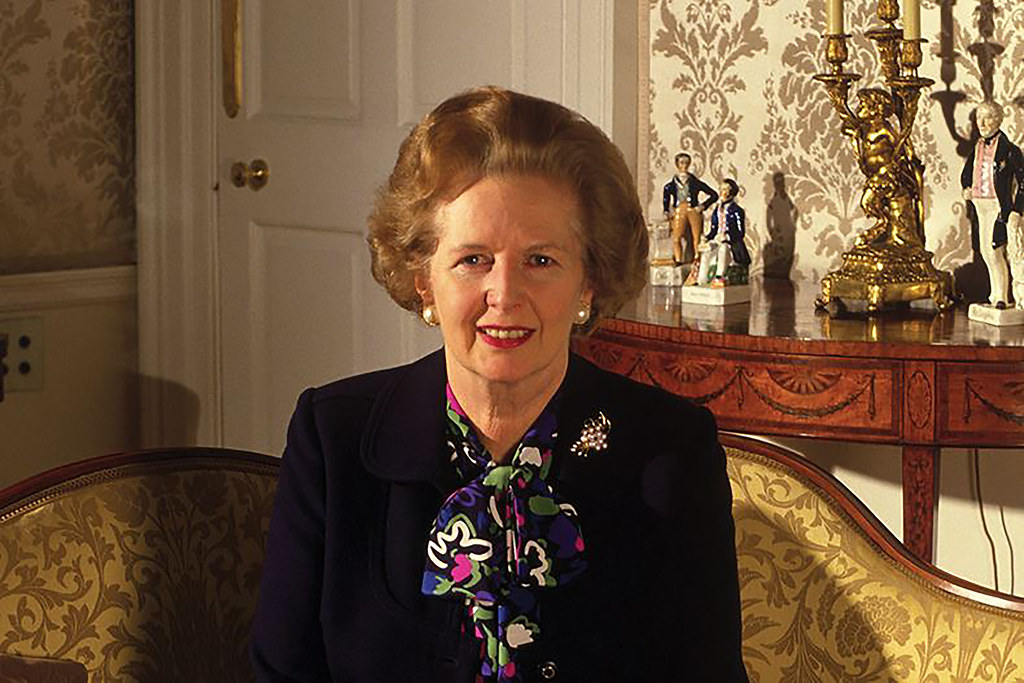
Margaret Thatcher at 10 Downing Street. (Levan Ramishvili / Flickr)
Rarely does a social science concept seep into popular discourse. “Globalization” and “neoliberalism” are standout examples, having become go-to terms for the Left in recent decades. “Financialization,” too, has shown signs of such crossover potential. Like globalization and neoliberalism, it also signifies a fundamental transformation in social life that has, many claim, warped economic development and constrained democracy.
Financialization refers to the growing size and importance of financial markets in global capitalism since the 1970s. Credit bubbles have inflated, colossal banking institutions have swallowed up smaller ones, and complex financial instruments have proliferated. Many industrial corporations have also become financialized, earning increasing revenues from financial ventures and reinvesting them in short-term schemes to boost share prices. Everyday life, too, has been transfigured. We are increasingly pressured to approach our lives like balance sheets, making prudent investments, managing risk, and acquiring financial assets (chiefly housing) to insulate ourselves against economic uncertainty.
This process of expanding financial logics has been accompanied by another development, referred to as “secular stagnation” or the “long downturn.” Global capitalism’s dynamism has waned following the end of the post–World War II economic boom. Since the 1970s, profitability, investment, and GDP growth have remained relatively stagnant. What paltry growth the world economy has enjoyed in recent years has depended on continuous interventions by central banks, which have channeled vast quantities of money into financial markets in an attempt to stimulate a boom.