Is Wordle Still for Everyone?
Beloved, iconic, thoroughly memeable — in hindsight, it was only a matter of time before Wordle was bought up by a media giant.
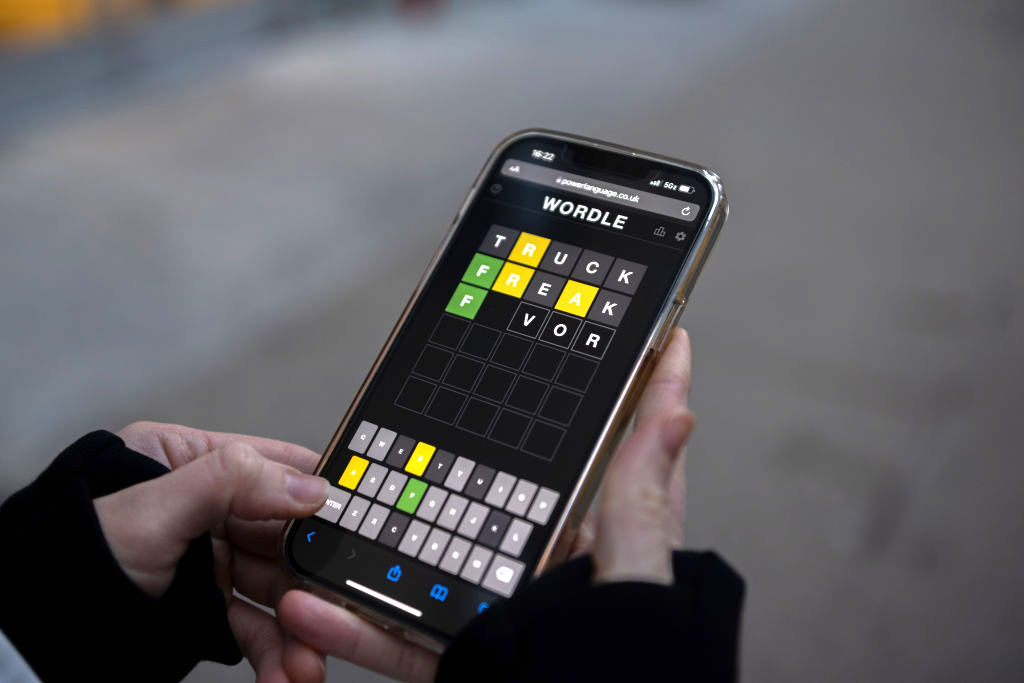
Wordle is a five letter word guessing game that gives the user six tries to guess the word correctly. (Alexi Rosenfeld / Getty Images)
In early January, the New York Times ran an article, “Wordle Is a Love Story,” about a free online game that became a hit overnight. Wordle, which challenges its players to guess the day’s five-letter word — aided by colorful tiles that suggest letter placement — was developed by Josh Wardle to entertain his puzzle-loving partner. In only three months, Wordle’s audience expanded to include hundreds of thousands of players, drawn to the free daily challenge and its ubiquitous grid of gray, yellow, and green squares.
But when the Times announced on Monday that it had purchased Wordle, the romance hit a sour note. Across social media apps like Twitter, the usual daily posts of Wordle grids are interspersed with fans’ bleak predictions of the game’s demise. Wordle will join a slate of other word games owned by the Times — many of which, like the crossword, sit behind a $5 monthly paywall.
Wordle has bloomed beyond the confines of a six-by-five grid to become a magnetic social experience. Its system of color-coded letters allows players to share their step-by-step path to victory without handing out any spoilers. The frustration of near misses, the shock of a first guess that hits the mark — it’s all captured in the Wordle grid, and everyone else wrangling their way through the daily puzzle can share in your journey.