The End of the AOC Honeymoon
In 2018, Alexandria Ocasio-Cortez was heralded as the millennial successor to Bernie Sanders. Today, some on the Left are starting to have doubts.
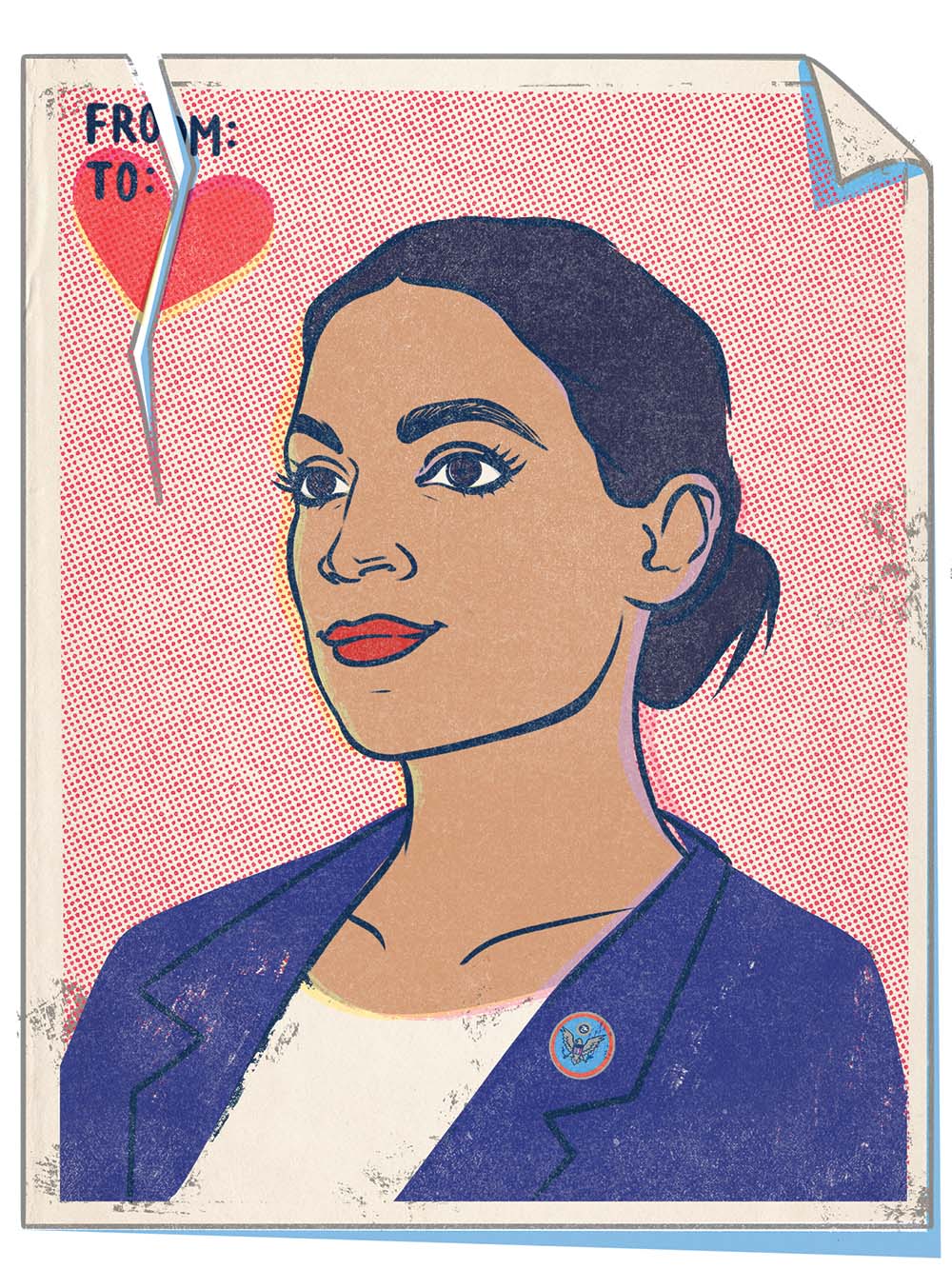
Illustration by Paul Tuller
Sitting in the Las Vegas hospital room where his boss was convalescing in October 2019, Bernie Sanders’s deputy campaign manager, Ari Rabin-Havt, thought this could be the end of the run. After a legendary insurgent bid for the presidency in 2016, the Vermont senator fueled enthusiasm the Left hadn’t seen in decades, but he was barely polling at 15 percent his second time around. A dismal late-September survey in the Des Moines Register had placed him fourth, and Elizabeth Warren surged ever closer to the top slot. Then, just when it felt like things were hitting their nadir, they hit their real nadir: after uncharacteristically requesting a chair during a Nevada fundraiser, Sanders learned he had suffered a heart attack. It isn’t the sort of thing that plays well when you’re campaigning for the world’s most powerful office at the age of seventy-eight.
Anyone who still has a “solidarity forever” sticker on their laptop can tell you what happened next: the team got a call from Congresswoman Alexandria Ocasio-Cortez, saying she’d be endorsing him for president alongside representatives Rashida Tlaib and Ilhan Omar. Rabin-Havt and a campaign colleague got permission from the hospital staff to lug tables and chairs to the senator’s bedside so they could make arrangements for a comeback rally in Ocasio-Cortez’s district in Queens. Before long, Sanders had some wind at his back: he got the most votes in Iowa and New Hampshire; Nevada was an absolute blowout.
For Rabin-Havt, the hospital phone call was an obvious turning point. “You know, you look at that moment and see a trajectory upward from that point,” he recounted by phone. “You have to give them credit for a move at a time when it was not politically advantageous to endorse. . . . It was literally at the point when it was the riskiest, and they stepped up.” I agreed with him. Seeing it all unfold over news reports — these unabashedly movement-aligned young women of color elected in a wave Bernie himself had set in motion, rallying around him when he was at his weakest to change American politics — I felt undeniably moved.