Price Controls Can Work, Sorry If This Offends
- Loren Balhorn
There’s something about the phrase “price controls” that drives some people — mainly economists — around the bend. But history shows that market economies rarely go very long without needing some form of price control — especially in a crisis.
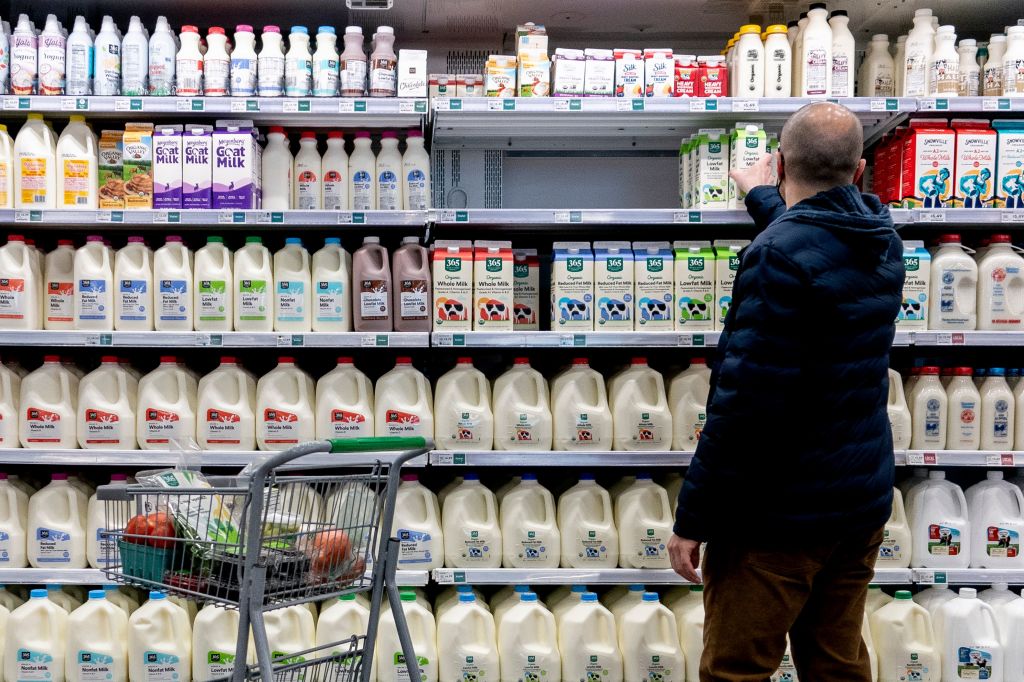
A shopper walks through the dairy aisle of a grocery store in Washington, DC, on February 19, 2022.(Stefani Reynolds / AFP via Getty Images)
When it comes to economic policy, certain terms tend to trigger particularly drastic reactions. One such term is “expropriation.” Expropriation is a widely accepted fact in coal mining and highway construction — in the United States it is often called eminent domain — but when, as was recently the case in Berlin, a popular referendum proposes targeted expropriations as a tool to stop rents from spiraling out of control, the debate quickly gets irrational and people start throwing around comparisons with the Soviet Union. It would appear that the practice itself is not the problem here, but rather the degree of public support for it.
More recently, an international controversy demonstrated that the term “price controls” triggers the same reaction.
Can Politics Actively Shape Prices? And What Does That Mean?
East Germany or Venezuela are often the first places that come up when discussing price controls, but they aren’t the only ones who’ve deployed them. Back in December 2020, in the middle of the second COVID-19 wave, rapid antigen tests were in short supply in Germany. In response, the Federal Ministry of Health issued a decree capping revenues for wholesalers at forty cents per test. That’s routine operating procedure in the German health care sector. Without these measures, there was a real danger that drastically increased profit rates on the way to the consumer could lead to significant price rises — while production costs stayed the same.