Portugal’s Communist Party Is Struggling to Return to Past Glories
Since the Carnation Revolution of 1974, Portugal's Communist Party has helped shape its country's destiny and defend labor rights. But the party’s setbacks in last month's general election show how its working-class social base has drifted away from it.
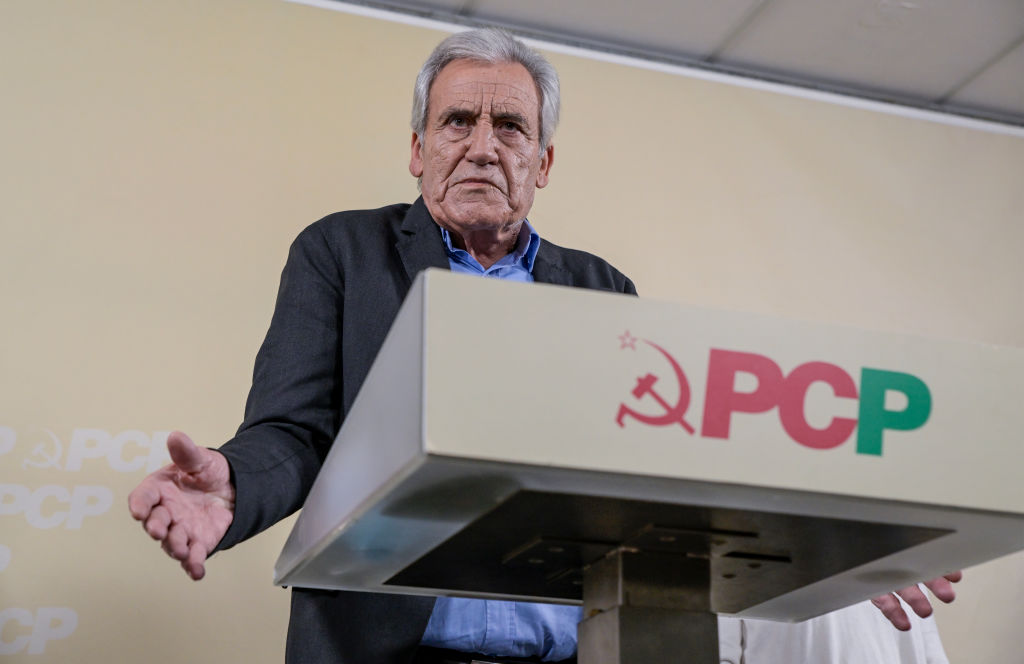
Portuguese Communist Party secretary general Jerónimo de Sousa speaks to the press at the party’s Lisbon headquarters regarding the poor results in the January 30 snap elections. (Horacio Villalobos / Corbis via Getty Images)
The general election on January 30 was a major setback for Portugal’s once mighty Communist Party (PCP). Its longstanding alliance with the Greens (PEV), known as the Democratic Unity Coalition (CDU), elected just six MPs to the 230-member parliament, with 4.4 percent of the vote. This followed an already poor result in 2019, when, after four years of outside support for António Costa’s Socialist-led government, it took 6.5 percent and 12 MPs — at the time, its worst score since the turn of the millennium.
The PCP remains relatively large in terms of its activist base and hegemony in the country’s trade union movement, and boasts almost fifty thousand members in this country of just 10 million people. It can still put on events such as the Festa do Avante! — a weekend of music and politics that annually attracts hundreds of thousands of mostly young visitors, thanks to its informal atmosphere and high-quality cultural program. Yet in recent years, the party has been losing militants.
The PCP’s difficulties are particularly brought into relief by the success of the center-left Socialist Party (PS), which secured 42 percent of the vote on January 30. Where Prime Minister Costa had in recent years repeatedly relied on the parliamentary backing of both the PCP-PEV alliance and the anti-capitalist Left Bloc, the snap elections last month awarded him an absolute majority of seats in parliament. Having, since 2015, faced pressure to vote through Costa’s budgets, the PCP now finds its influence greatly reduced.