Portugal’s Election Is About Whether Austerity Is Really Over
Portuguese premier António Costa has called a snap general election in a bid to end his dependency on left-wing parties’ votes in parliament. The split owes to his refusal to roll back attacks on labor rights imposed by the previous right-wing government.
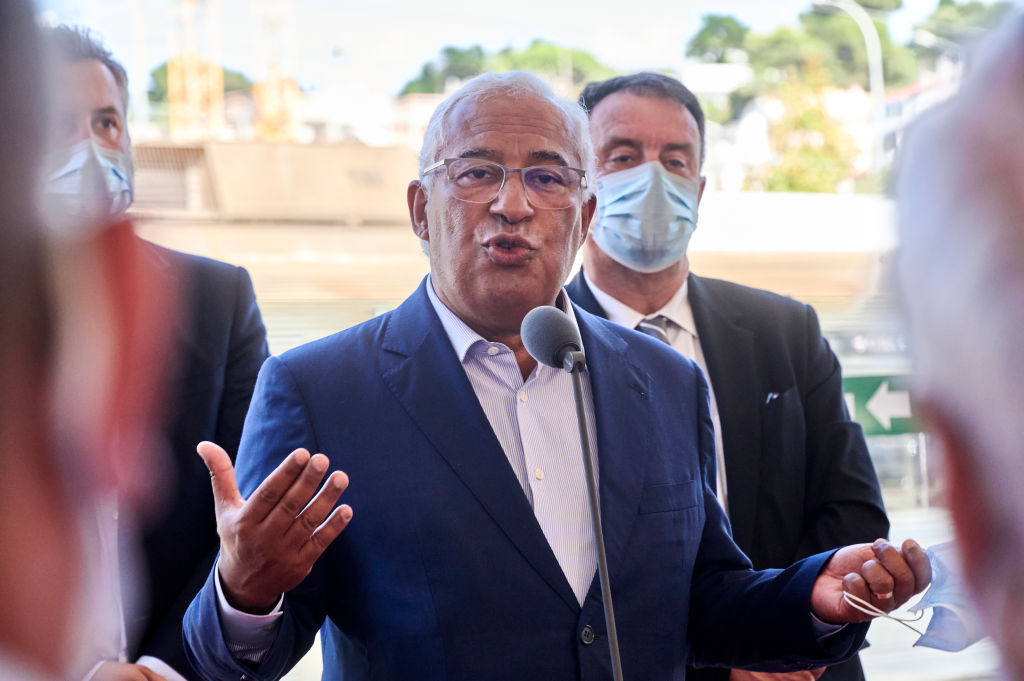
Portuguese prime minister António Costa delivers remarks in Cascais, Portugal. (Horacio Villalobos / Corbis via Getty Images)
Over the last six years, Prime Minister António Costa’s Socialists have been the only party of government in Portugal. Yet, while Costa’s party made gains in the last general election in 2019, it has not achieved an absolute majority. It has thus been forced to negotiate with smaller, left-wing forces — an arrangement popularly known as the geringonça, or “contraption.”
For years, this experience has been full of tensions and conflicts, in a country still recovering from the austerity measures imposed by the European troika in the early 2010s. At the end of October, this situation ended in an outright rupture, as the Socialists refused to reach a budget deal with the Left Bloc and the Communist Party. Snap elections have now been called for January 30.
The vote comes in a complicated scenario, characterized by not only the pandemic but also the rise of the far right, in a country which had hitherto remained on the fringes of this phenomenon. Jacobin’s Brais Fernández spoke to Jorge Costa MP, a leading member of the Left Bloc, about the government’s collapse, the coming election, and the concerns of working-class Portugal.