Capitalism Hates Collective Fun
Human beings are wired for collective, public fun — the kind that a game like Wordle provides. But capitalism, with its relentless drive to privatize, insists instead that entertainments are best experienced as individualized, solitary pursuits.
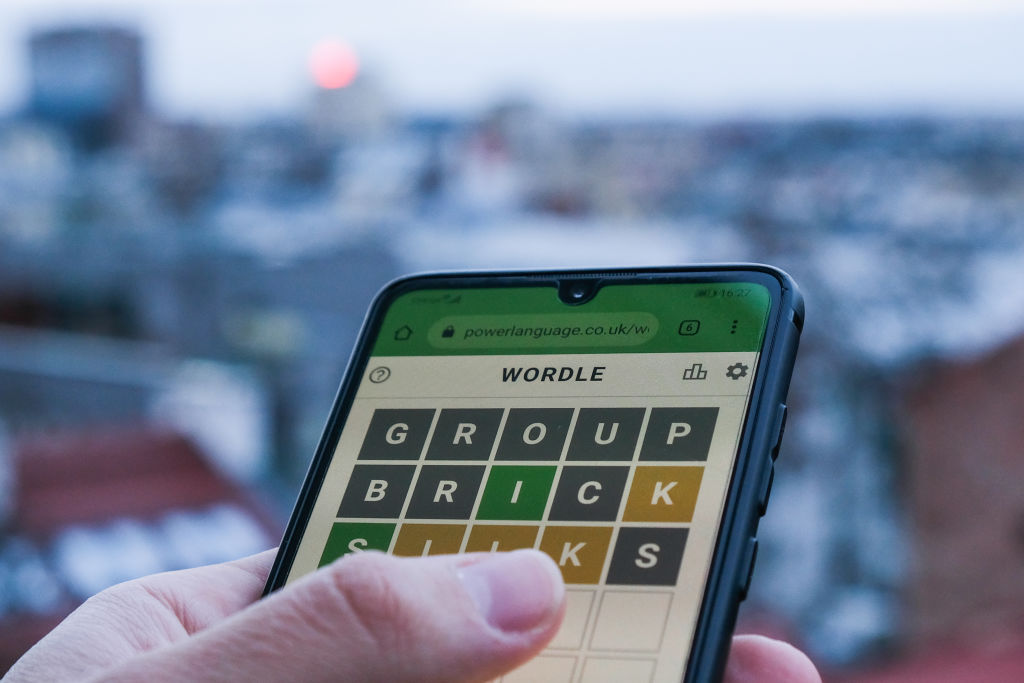
Although each person plays alone, Wordle is a communal experience because the daily word is the same for everyone. (Jakub Porzycki / NurPhoto via Getty Images)
Online commentary and complaint have flowed freely ever since the New York Times announced it was buying Wordle, the online puzzle game that became a global sensation, and I’m hardly alone in lamenting the likelihood that Wordle will soon be transformed from a kind of public good available to all free of charge into yet another gated and paywalled internet amenity.
But as one of the many people for whom Wordle has become an indispensable daily pleasure, what I find most dispiriting about the news is not just the prospect of the game’s commodification, as undesirable as that may be. In fact, it wouldn’t be rational, under capitalism, for Josh Wardle, Wordle’s creator, to continue to provide us with his brilliant idea and daily labor for free, given that he also needs to work at a real job and survive in Brooklyn. To his credit, he has not been greedy: Wardle probably could have sold the concept for much more money to a gaming company. The New York Times was not the worst choice; even if the Times does monetize Wordle, it will at least help support the paper’s newsgathering, which is always badly needed.
Even more than the relentless drive to turn everything into a profitable product, what the Wordle saga highlights for me about capitalism is its relentless drive to narrow, fence off, and privatize any kind of communal, collective fun.