“My Goal for 2022 Is to See the Return of Democracy in Myanmar”
One year ago today, Myanmar’s military generals seized power in a bloody coup that wiped out workers’ rights. We spoke with a union leader and three garment workers, who for months launched general strikes against the coup.
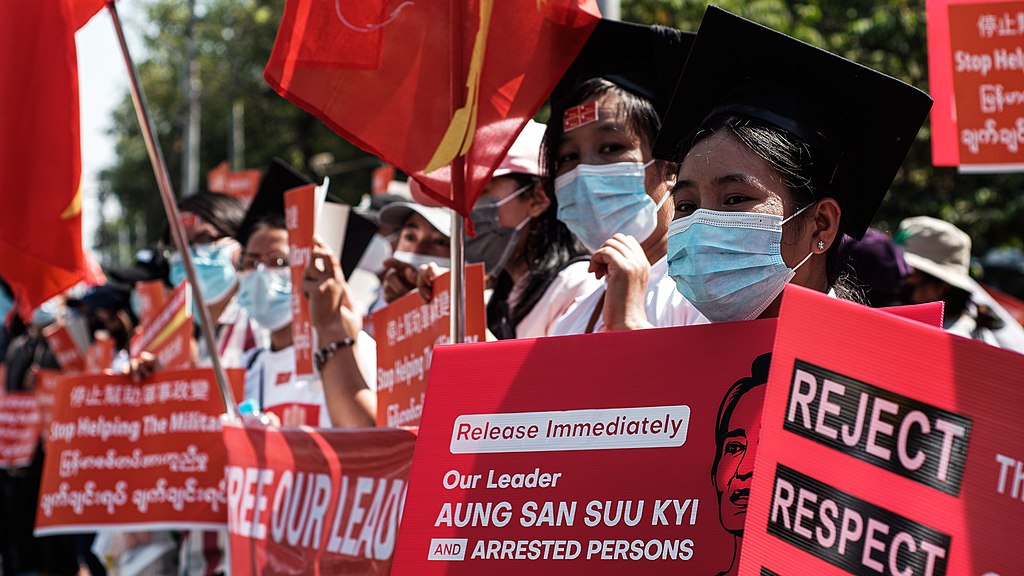
A protest in Myanmar against the military coup on February 14, 2021. (Htin Linn Aye / Wikimedia Commons)
One year ago today, Jacobin was finalizing an interview with Ma Moe Sandar Myint, president of the Federation of General Workers Myanmar (FGWM), when news of a military coup broke. Almost immediately, we heard that garment workers were planning to use their organizing skills to stage nationwide strikes against the military takeover.
Over the subsequent weeks, garment workers played a central role in labor actions that shut down huge swaths of the country’s economy. Doctors and teachers, the majority of whom are government employees, went out on strike with the garment workers. Railway workers and other civil servants soon followed, joined by private sector bank workers.
The anti-coup resistance initially sought to restore the National League for Democracy (NLD) government, headed by Aung San Suu Kyi, which in 2010 entered a power-sharing agreement with the military generals that had long ruled the country. Over time, protesters’ demands became more radical, including scrapping the 2008 constitution, which gave the military control over key ministries and guaranteed them 25 percent of the seats in parliament.