In the Face of Massacres, Workers in Myanmar Are Still Fighting the Coup
Myanmar’s coup government has slaughtered workers for launching general strikes against the junta — but workers have doubled down, calling for comprehensive sanctions against the military. We talked to two leaders of the strikes.
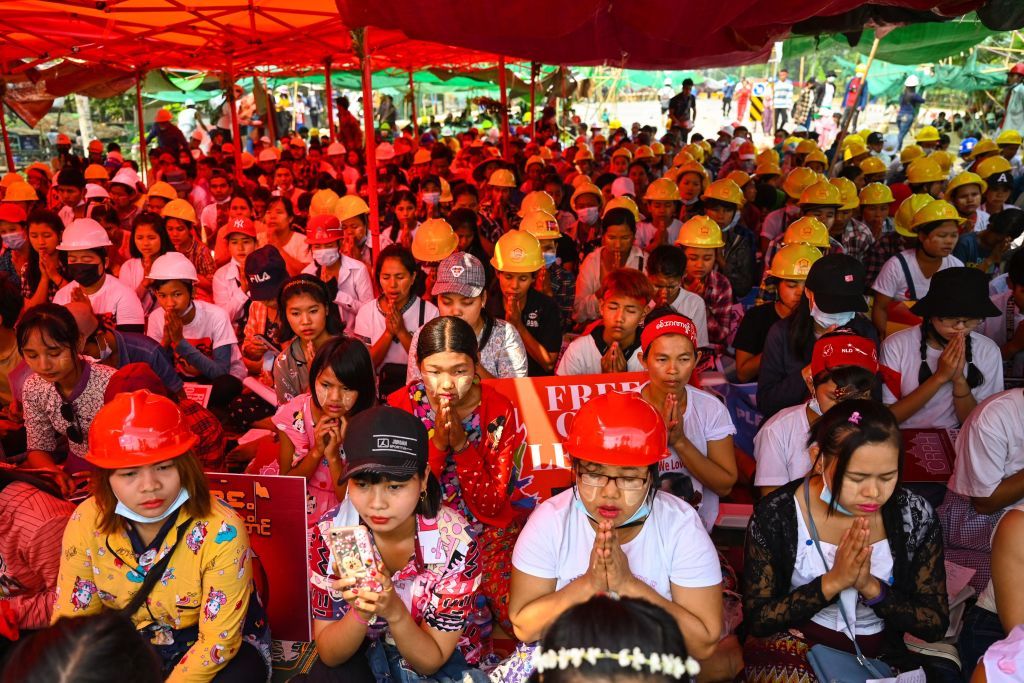
Protesters pray during a demonstration against the military coup in Yangon’s Hlaing Tharyar township on March 14, 2021. (STR / AFP via Getty Images)
On March 14, Myanmar’s largest industrial district — Hlaing Tharyar, a sprawling township on the outskirts of Yangon that is home to hundreds of factories and hundreds of thousands of factory workers — was attacked by the country’s military. For nearly six weeks, workers there had launched a series of strikes and protests against the military junta that seized power on February 1. Using tactics usually reserved for invading armies, the military destroyed barricades and opened fire on crowds. As the carnage unfolded, thirty Chinese-owned factories were set ablaze. By day’s end some forty workers lay dead and scores more were seriously injured.
In the following days, hundreds of thousands of workers fled back to their home villages, and for nearly a week production ground almost to a halt. Some factories in Hlaing Tharyar township have resumed operations in recent days, but on a limited scale.
International cargo ships have largely ceased docking in Yangon, meaning that factories can’t get the raw materials needed to run. Bank employees have been on strike for nearly two months, making payments nearly impossible, and truckers have engaged in waves of strikes that have made internal shipping difficult. Myanmar is likely to lose its preferential trade statuses with the European Union and United States. Commodity prices have already begun to soar, and the population of cash-dependent workers are likely to suffer immensely.