Myanmar’s Labor Movement Is Central to the Fight Against Authoritarianism
The coup in Myanmar has exposed the faulty foundation of the country's democratic transition. We spoke with an organizer in Myanmar's burgeoning labor movement — which will be central to the fight against authoritarianism in the coming days and months.
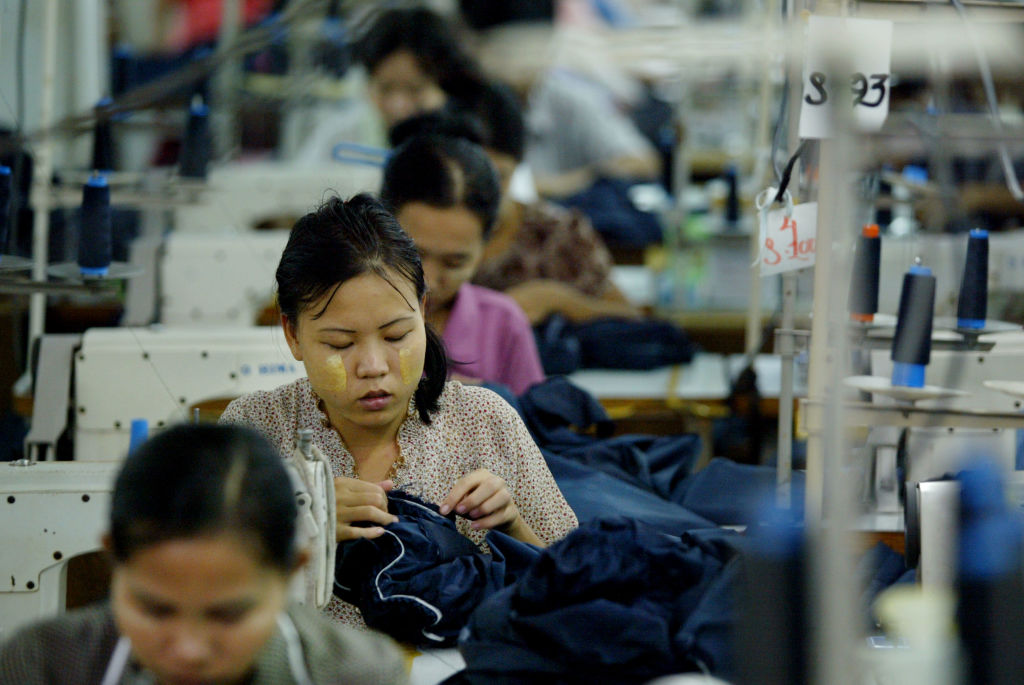
Women stitch sports clothing in a garment factory in Hlaing Tharyar, Myanmar, 2003. (Paula Bronstein / Getty Images)
On Monday, Myanmar’s military seized power in a coup d’etat, deposing former international darling Aung San Suu Kyi. The military putsch dramatically exposed Myanmar’s widely lauded democratic transition — which came to the world’s attention with the freeing of Suu Kyi in 2010 and the first democratic election in decades in 2015 — as fundamentally flawed. The 2008 constitution that governs the country grants the military full control over key ministries and broad authority to declare a state of emergency.
The question of how Myanmar’s people will respond now looms large. Suu Kyi and her party remain popular in the country despite her brutal record — which includes enabling the ethnic cleansing of Rohingya Muslims — because they’re seen as representing an end to military rule and an increased openness to the world.
Meanwhile, the medical staff in major cities have called for a strike, the country’s largest labor federation is urging people not to cooperate with the military government on labor issues, and a Facebook group titled “civil disobedience movement” has drawn a hundred eighty thousand likes.