Elizabeth Holmes Embodied the Lies at the Heart of Silicon Valley
The bizarre tale of Theranos founder Elizabeth Holmes’s years-long defrauding of many of the world’s most “sophisticated” investors and celebrities highlights the mendacity and self-deception that drive Silicon Valley tech culture.
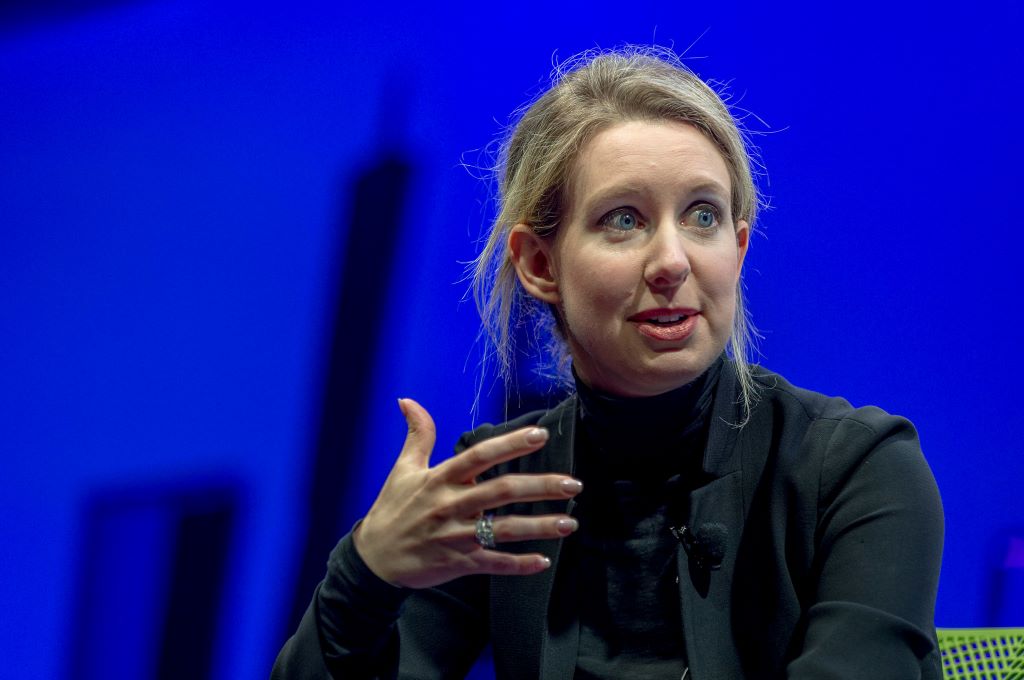
Elizabeth Holmes speaking at the 2015 Fortune Global Forum in San Francisco, California, on November 2, 2015. (Stuart Isett / Fortune Global Forum via Flickr)
As someone who’s often made it my business to dive deep into the shallow bombast of centrist politicians, I feel an immediate sense of déjà vu whenever I’m tasked with writing about Silicon Valley. Hucksterism, true enough, comes in many forms, and there’s plenty to differentiate the private version from the more public kind regularly churned out by both of America’s major political parties. Nonetheless, pair a hagiographic portrait of a political figure (like the now-infamous March 2019 cover feature on Beto O’Rourke published by Vanity Fair) with its tech sector equivalent, and the parallels start to pile up pretty fast.
Some of these, of course, are at least partly about the fawning conventions of profile journalism. Vanity Fair’s poorly aged depiction of O’Rourke, for example, expended countless paragraphs mythologizing mundane details about its subject’s tastes and personal biography (one particularly emblematic sentence read: “Beto O’Rourke is quintessentially Generation X, weaned on Star Wars and punk rock and priding himself on authenticity over showmanship and a healthy skepticism of the mainstream”) while offering few tangible details about what he was actually running for president to do.
Revisit Fortune’s now equally infamous 2014 writeup on Theranos founder Elizabeth Holmes, and you’ll find the same basic schtick throughout, coupled with a similarly credulous appraisal of the figure at its center. An excerpt: