Kazakhstan’s Protests Are About Soaring Inequality
Kazakhstan is ablaze with protests driven by mass layoffs and the ever more intolerable cost of living. But in a country where almost all opposition has been silenced for years, the movement has to avoid being captured by rival oligarchic forces.
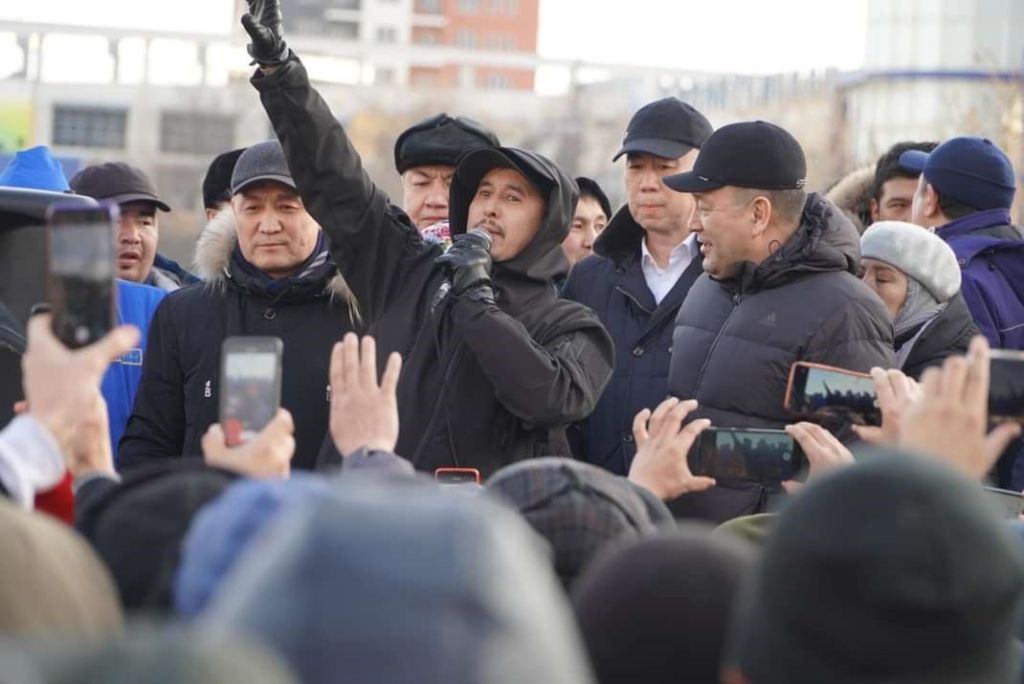
People gather at a protest in the Mangistau Region, Kazakhstan on January 4, 2022. (Xinhua via Getty Images)
Today, all post-Soviet mass media and TV channels are riveted by the protests that have suddenly engulfed Kazakhstan. To some, they arouse hope; to others, horror and rejection. There are contradictions and different interpretations of what is happening: righteous people’s protest, clan wrangling, conspiracy of pro-Western and pro-Turkish forces, or even “Islamist reaction.” But what is really happening? In an article originally translated by LeftEast, a correspondent for Zanovo Media interviewed Aynur Kurmanov, one of the leaders of the Socialist Movement of Kazakhstan.
A Model Republic
Kazakhstan is one of the biggest post-Soviet countries, second only to the Russian Federation in the system of political and economical relations which was built after Soviet collapse. And this is not just because Nursultan Nazarbayev was one of the architects of the CIS (Commonwealth of Independent States). The Kazakh model of smooth transformation of former party and Soviet nomenclature into a capitalist oligarchy with “an Asian face” was seen by many as a model.
Indeed, this model had superficially attractive features not only for the ruling elites in other republics but also for the average citizen: a high economic level, the presence of formal attributes of democracy, and few restrictions on Western culture. Large reserves of natural resources, including oil, and the industrial potential inherited from the socialist period proved a good launching pad for the young state. At the same time, the official propaganda of the Russian Federation and the CIS channels liked to set Kazakhstan as an example of preserving “the union traditions,” honoring the memory of the Great Patriotic War, the absence of nationalism, and so on.