The Green Transition Can’t Be an Excuse to Fire Workers
German engineering giant Bosch is mounting massive layoffs in the name of adapting to the electric car market. But workers insist the move is really about increasing profits — and climate protesters have joined the fight to save their jobs.
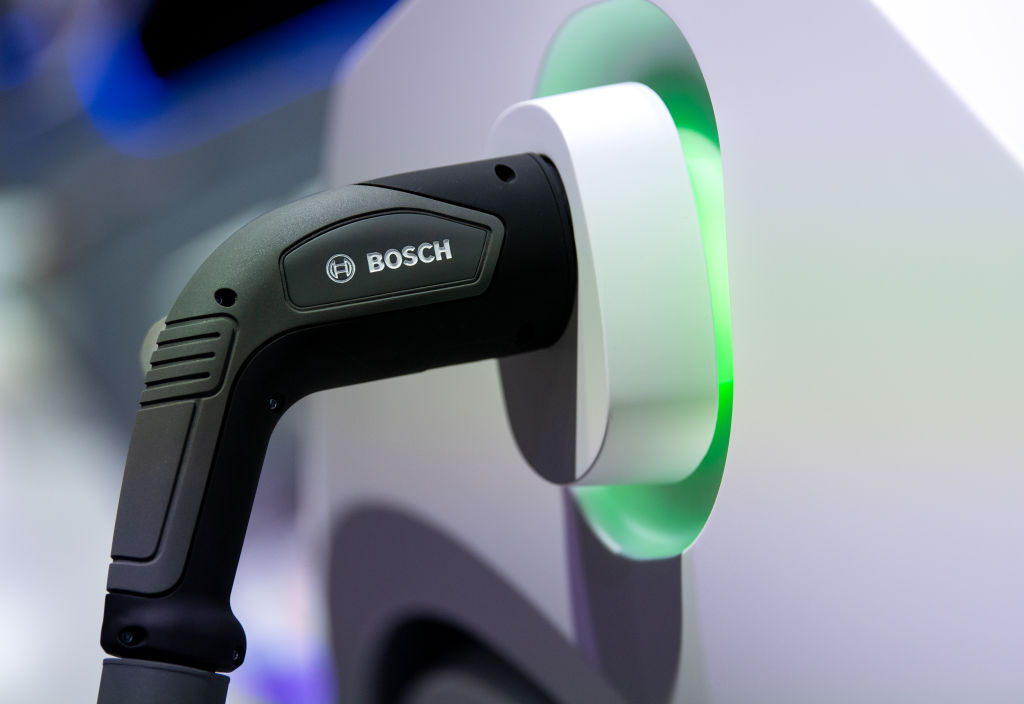
Bosch shows components for electric cars at an international auto show in Munich, Germany. (Sven Hoppe / Picture Alliance via Getty Images)
“This is a catastrophe,” says Giuseppe Ciccone, standing in front of a Bosch engineering plant in Munich, Germany. On a day of action organized by the IG Metall union, he has just given a combative speech to about six hundred workers. The chairman of the local Bosch works council (a structure for employee representation), Ciccone has been working at the plant for almost four decades, having started there at age eighteen. The plant and its employees are a central part of his life. “Like a family,” he says. But, as of late, the family has been wracked by crisis, with the plant’s future now at stake.
Last year, Bosch announced plans to close the facility, hitherto known as a production site for combustion engines, manufacturing fuel pumps and valves for diesel and petrol engines — none of which are going to be used in electric cars. Twenty years ago, about 1,600 people worked at the site; today, there are only about 260 left. But their fight against the planned closure has come to symbolize the wider conflict over Germany’s auto industry — and its workers’ future.
Transformation From Above
Bosch is currently the world’s largest supplier for the auto industry — with most of its turnover coming from combustion engine technology. If it is to maintain its powerful position, the company will have to transform. To this end, it plans, among other things, to relocate the production that was previously located in Munich. A small part would go to Nuremberg, also in Germany, but the bulk would head to the Czech Republic or Brazil. The move comes even after current employees lost €40 million in potential earnings between 2005 and 2017 as part of an agreement to secure their jobs. It’s a remarkable approach from a firm whose website boasts of the Munich plant’s “family-like togetherness.”