Julius S. Scott Captured the Haitian Revolution’s Emancipatory Reach
Radical historian Julius S. Scott, who passed away this month, transformed our understanding of the Haitian Revolution and its emancipatory impact on freedom struggles throughout the Americas.
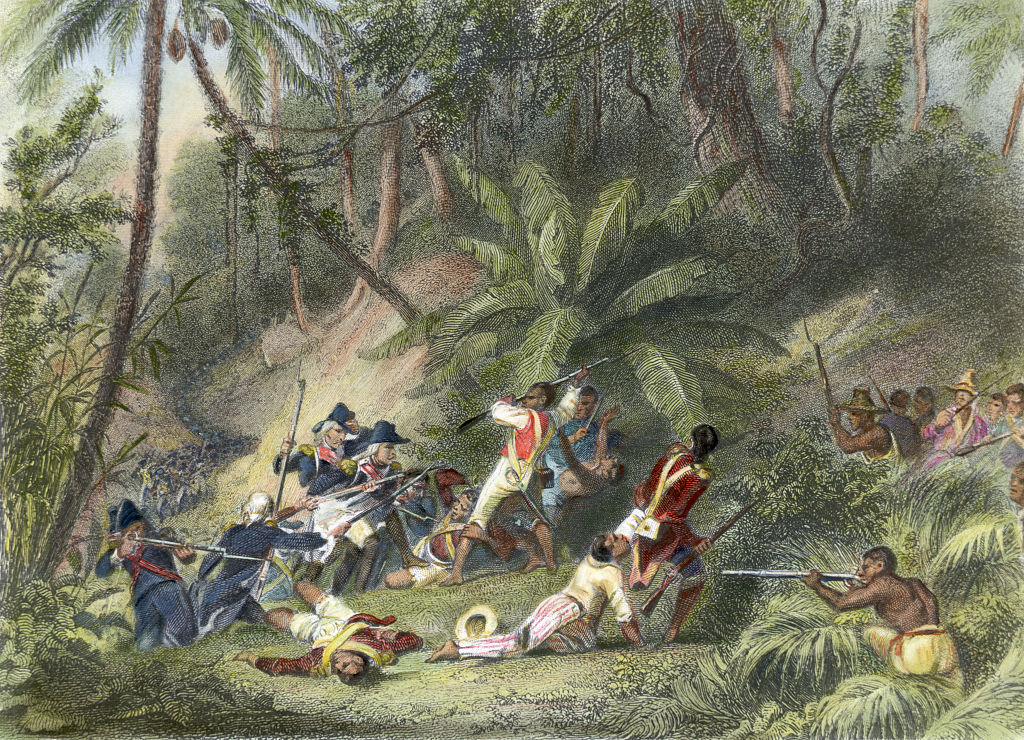
Illustration depicting Toussaint L’Ouverture participating in the successful revolt against French power in Saint Domingue (Haiti). Hand-colored engraving. (Bettmann / Getty Images)
In a year filled with too many losses, the passing of radical historian Julius S. Scott this past December 6 cut especially deep. Only sixty-six years of age, Scott was mourned by scholars, students, and activists who champion his classic The Common Wind: Afro-American Currents in the Age of the Haitian Revolution as one of the great pieces of historical scholarship of the last thirty years.
Telling the story of how the Haitian Revolution reverberated throughout the Americas and helped shape the period Eric Hobsbawm referred to as the “age of revolutions,” Scott’s The Common Wind blazed a path where future researchers could appreciate the global impact of the small island’s struggle for emancipation.
Scott’s greatest achievement was perhaps to reveal the full sweep of political creativity, collective intelligence, and international cooperation that lay behind eighteenth- and nineteenth-century slave revolts. In the case of Haiti, Scott convincingly showed how that project led not only to the creation of Latin America’s first independent nation-state, but inflamed countless future struggles for the abolition of slavery all across the Americas and beyond.