The French Revolution Was the Beginning of the Modern World
Conservative ideologues have dismissed the French Revolution as an unnecessary bloodbath. But a fresh look at the Revolution shows us its vital relevance to contemporary political issues, from demands for economic equality to the struggle against racism.
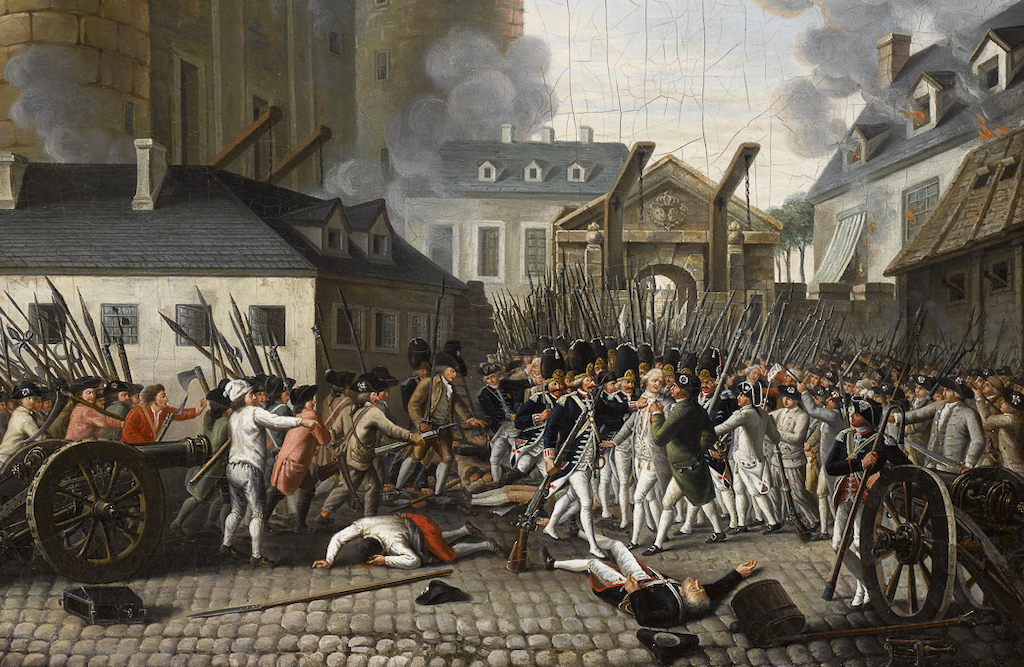
Anonymous, Storming of the Bastille, painting circa 1789–91. (Wikimedia Commons)
Today, more than two hundred years since the dramatic events that began in 1789, the story of the French Revolution is still relevant to all those who believe in liberty and democracy. Whenever movements for freedom take place anywhere in the world, their supporters claim to be following the example of the Parisians who stormed the Bastille on July 14, 1789.
Whoever reads the words of the Declaration of the Rights of Man and Citizen published in August 1789 immediately recognizes the basic principles of individual liberty, legal equality, and representative government that define modern democracies. When we think of the French Revolution, however, we also remember the violent conflicts that divided those who participated in it, and the executions carried out with the guillotine. Likewise, we remember the rise to power of Napoleon, the charismatic general whose dictatorship ended the movement.
When I began my own career as a scholar and teacher in the 1970s, the memory of the worldwide student protest movements on university campuses in the 1960s was still fresh. Those movements inspired interest in the French Revolution, which seemed to stand alongside the Russian Revolution of 1917 as one of the great examples of a successful overthrow of an oppressive society.