The Portuguese Myth
Portugal’s Socialist-led government looks like an exception to the decline of European social democracy. But its record in fighting austerity is less clear.
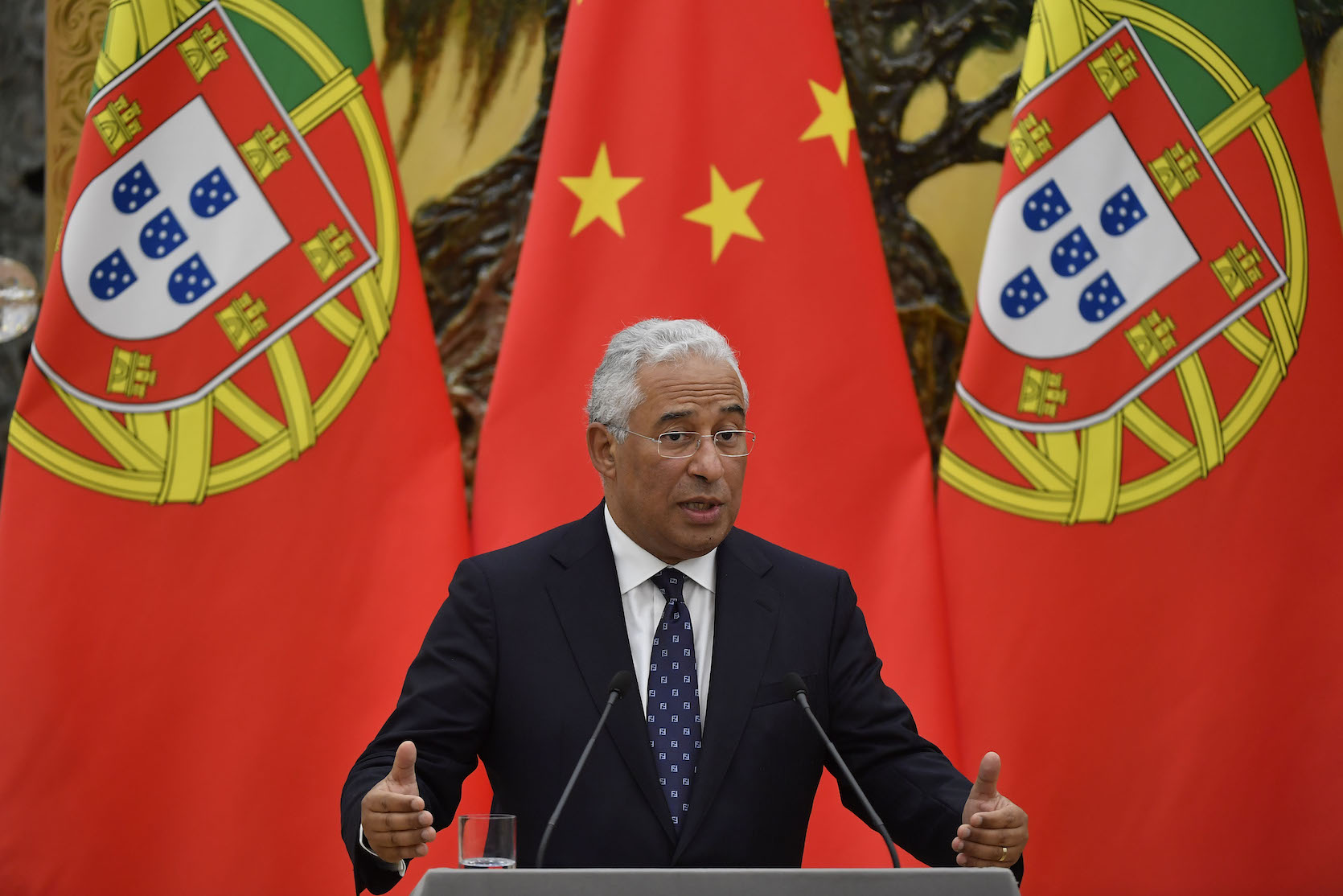
Portuguese prime minister Antonio Costa speaks at a press conference on October 9, 2016 in Beijing, China. Naohiko Hatta – Pool / Getty
Former prime minister Pedro Passos Coelho liked to say that “Portugal is not Greece.” The truth in his slogan was not that austerity was any different in the two countries. Under the diktats imposed by the troika (the International Monetary Fund, the European Central Bank, and the European Commission) memorandum, unemployment and poverty skyrocketed, the labor market was further liberalized, there was a 35 percent tax hike across the board, banks were bailed out, and social services were underfunded. Hundreds of thousands of people emigrated from the country.
Nor did the difference with Greece lie in the strength of Portugal’s economy. In fact, its state structure is even weaker than Greece’s, and its economy even more dependent on the European core, after the destruction of almost all productive sectors throughout four decades of European integration. This process was no different from what took place in Greece. Portugal was intended to serve as an example to the rest of Europe: it was meant to prove that austerity does work.
The contradiction is that while Portugal is known for having a left-wing government, it is not meaningfully an “anti-austerity” administration. A rhetoric of limiting poverty has come to replace any call to resist the austerity policies being imposed at the European level. Portugal is thus less a test case for a new left politics than a demonstration of the limits of government action in breaking through the austerity consensus.